Your skin reflects your inner health, and what you eat plays a big role in how you look. If you want a natural glow, sunflower seeds might be the answer you have been searching for. These tiny powerhouses are loaded with nutrients that support skin health from within.
At CMS Industries, we understand the connection between quality nutrition and wellness. As a trusted supplier of premium sunflower seeds, we know these small kernels pack a mighty nutritional punch.
Let’s explore whether eating sunflower seeds can truly make your skin glow.
What Makes Sunflower Seeds Special?
Sunflower seeds come from the bright yellow flower heads of the sunflower plant (Helianthus annuus). Each flower can produce up to 2,000 seeds. These edible kernels are enclosed in black and white striped shells that need to be removed before eating.
The nutritional profile of these seeds is impressive. A quarter-cup serving provides 82% of your daily vitamin E requirement. They also contain healthy fats, protein, minerals, and antioxidants that benefit your entire body.
CMS Industries sources sunflower seeds from trusted growers, ensuring you get natural, high-quality products. We offer both black and gray-striped varieties, all cleaned using modern sortex technology.
Can Sunflower Seeds for Skin Glow Really Work?
Yes, sunflower seeds can help your skin glow. Here is why.
Your skin needs specific nutrients to stay healthy, supple, and radiant. Sunflower seeds deliver many of these nutrients in one convenient package. The combination of vitamins, minerals, and fatty acids works together to nourish your skin from the inside out.
Research shows that people who eat seeds regularly have better skin health markers. A study found that those who ate sunflower seeds and other seeds at least five times weekly had 32% lower inflammation levels compared to people who ate no seeds.
The Science Behind Sunflower Seeds for Skin Glow
Vitamin E: Your Skin’s Best Friend
Vitamin E stands as the star nutrient in sunflower seeds. One ounce provides about 69% of your daily vitamin E needs. This powerful antioxidant protects your skin cells from free radical damage.
Free radicals come from sun exposure, pollution, and stress. They break down collagen and cause premature ageing. Vitamin E fights these harmful molecules, keeping your skin firm and youthful.
The vitamin also helps your skin retain moisture. Well-hydrated skin appears plump, smooth, and naturally glowing.
Essential Fatty Acids for Hydration
Among the health benefits of seeds, sunflower seeds provide omega-6 fatty acids, especially linoleic acid, an essential fat that helps maintain the skin’s protective barrier.
A strong skin barrier locks in moisture and keeps irritants out. When your barrier functions properly, your skin stays hydrated and comfortable. Dry, flaky skin becomes soft and radiant instead.
One ounce of sunflower seeds provides 38% of your daily linoleic acid needs. This fatty acid also supports ceramide production, which further helps your skin stay moisturised.
Copper for Collagen Production
Collagen is the protein that keeps your skin firm and elastic. As you age, collagen production naturally decreases, leading to sagging and wrinkles.
Sunflower seeds are rich in copper, with one ounce providing 56% of your daily requirement. Copper plays a vital role in collagen synthesis. By supporting collagen production, these seeds help your skin maintain its youthful structure.
Selenium and Anti-Inflammation
Three tablespoons of sunflower seeds deliver about 21% of your daily selenium needs. This trace mineral supports your thyroid function and acts as an antioxidant.
Selenium also has anti-inflammatory properties. Skin inflammation can lead to redness, acne, eczema, and other problems. By reducing inflammation, sunflower seeds help calm your skin and promote a clearer complexion.
Beta-Carotene: Natural Sun Protection
Beta-carotene in sunflower seeds converts to vitamin A in your body. This compound acts like a natural sunscreen, absorbing harmful UV rays.
While sunflower seeds cannot replace proper sun protection, they do provide an extra layer of defence. Beta-carotene also helps repair sun-damaged skin and reduces sensitivity to UV exposure.
How Sunflower Seeds Improve Different Skin Concerns
Fighting Acne and Blemishes
Sunflower seeds contain zinc and vitamin E, which work together to fight acne. Zinc controls oil production and has antibacterial properties. It helps reduce the bacteria that cause breakouts.
The anti-inflammatory compounds in these seeds calm irritated skin. This reduces redness around pimples and helps them heal faster.
Reducing Fine Lines and Wrinkles
Sunflower seeds are excellent seeds for a healthy diet, as their antioxidants help combat oxidative stress, one of the main causes of premature ageing, and protect against collagen breakdown.
The vitamin E content specifically targets free radicals that damage skin cells. Over time, this protection can reduce the appearance of fine lines and prevent new wrinkles from forming.
Healing Dry, Flaky Skin
Essential fatty acids in sunflower seeds nourish dry skin from within. They strengthen your skin barrier and prevent moisture loss.
If you struggle with dry patches or flaky skin, adding sunflower seeds to your diet may help. Many people notice softer, more supple skin within a few weeks.
Evening Out Skin Tone
Vitamin E in sunflower seeds helps maintain even melanin production. This can reduce dark spots and hyperpigmentation over time.
The seeds also promote healthy cell turnover, helping your skin shed damaged cells and reveal fresh, glowing skin underneath.
How Much Should You Eat?
A quarter-cup serving of sunflower seeds (about 30 grams) per day provides excellent nutritional benefits. This amount delivers most of the vitamins and minerals your skin needs without excessive calories.
One ounce contains roughly 164 calories, with most coming from healthy fats. While these are good fats, portion control still matters.
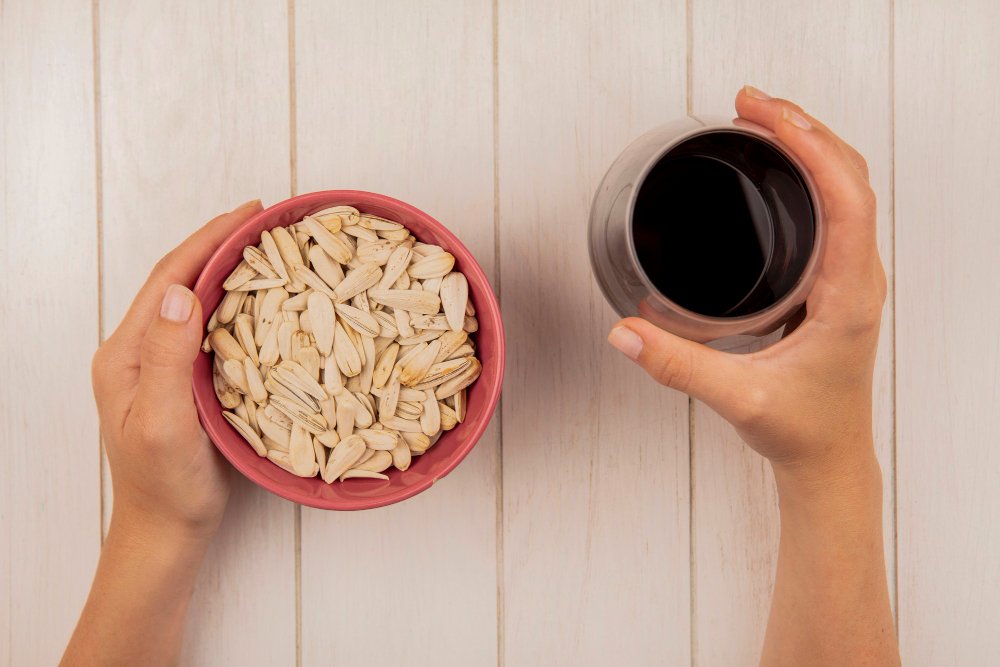
Eating them with the shell takes more time and naturally slows your consumption. Just remember the shells are often salted, so monitor your sodium intake.
Different Ways to Eat Sunflower Seeds
Raw vs. Roasted
Raw sunflower seeds retain all their nutrients. They have a mild, nutty flavour and soft texture. Soaking raw seeds overnight can make them easier to digest.
Roasted seeds have a crunchier texture and stronger flavour. Light roasting at low temperatures preserves most nutrients. Avoid heavily salted or flavoured varieties if you want maximum skin benefits.
Creative Ways to Include Them
Sprinkle sunflower seeds on your morning porridge or yoghurt. Add them to salads for extra crunch and nutrition. Blend them into smoothies for a protein boost.
You can make sunflower seed butter as a nut-free alternative to peanut butter. Stir the seeds into stir-fries or mix them into baked goods.
Trail mix combining sunflower seeds with dried fruits and other nuts makes a nutritious snack. Some people grind the seeds into a powder and add it to their meals.
Topical Uses: Sunflower Seed Oil
Sunflower seed oil extracted from these kernels offers topical skin benefits. The oil is lightweight, non-comedogenic, and absorbs easily without clogging pores.
You can apply a few drops directly to your face before bed. The vitamin E and fatty acids penetrate your skin, providing deep moisture and antioxidant protection.
Many skincare products now include sunflower seed oil. Look for cold-pressed, organic versions for the best quality. CMS Industries supplies high-quality sunflower seeds suitable for oil extraction.
What to Expect: Timeline for Results
Skin health improvements do not happen overnight. Your body needs time to absorb nutrients and rebuild skin cells.
Most people notice subtle changes within two to four weeks. Your skin may feel softer and look more hydrated first. Reduced inflammation and fewer breakouts often follow.
Visible changes like reduced fine lines and more even skin tone typically take two to three months of consistent consumption. Remember that results vary based on your overall diet, genetics, and lifestyle.
Things to Keep in Mind
Potential Concerns
Sunflower seeds contain moderate amounts of cadmium, a heavy metal. This substance can harm your kidneys if consumed in very large quantities over long periods.
Stick to recommended portions to avoid any risks. Buying from reputable suppliers like CMS Industries ensures you get clean, quality-controlled products.
Some people have seed or nut allergies. If you experience itching, swelling, or breathing difficulties after eating sunflower seeds, stop immediately and consult a doctor.
Complement, Do Not Replace
Sunflower seeds support skin health but cannot work alone. Maintain a balanced diet rich in fruits, vegetables, whole grains, and lean proteins.
Drink plenty of water, get adequate sleep, and protect your skin from excessive sun exposure. Use a good quality sunscreen daily. Manage stress through exercise or meditation.
Sunflower seeds enhance your skin health routine but do not replace other healthy habits.
The Bigger Health Picture
Beyond skin benefits, sunflower seeds support your overall health. They promote heart health by reducing inflammation and supporting healthy cholesterol levels.
The seeds boost your immune system with zinc and selenium. They provide energy through B vitamins, especially thiamin. The protein content helps build and repair tissues throughout your body.
Magnesium in sunflower seeds supports hundreds of bodily processes. This mineral helps reduce stress, which indirectly benefits your skin.
Quality Matters
Not all sunflower seeds offer equal benefits. Choose high-quality seeds from trusted suppliers.
At CMS Industries, we procure our sunflower seeds carefully and process them using modern cleaning technology. Our sortex and machine cleaning ensure you get pure, natural seeds without contaminants.
We offer customised packing options to suit different needs. Our efficient logistics system ensures fresh products reach you quickly.
Final Thoughts
Sunflower seeds for skin glow offer a natural, nutritious approach to better skin health. The combination of vitamin E, essential fatty acids, copper, selenium, and beta-carotene nourishes your skin from the inside out.
While these tiny seeds cannot magically transform your skin overnight, regular consumption supports healthier, more radiant skin over time. They work best as part of a balanced diet and healthy lifestyle.
Choose quality products from trusted suppliers like CMS Industries. Our premium sunflower seeds deliver the nutrients your skin needs to thrive. Add them to your daily routine and watch your skin respond with a natural, healthy glow.
Your skin deserves the best nutrition. Start with something as simple as a handful of sunflower seeds each day. The results might surprise you.
Frequently Asked Questions
Q1: How long does it take for sunflower seeds to improve skin?
You may notice softer, more hydrated skin within two to four weeks of daily consumption. Visible improvements like reduced fine lines and more even tone typically take two to three months. Results depend on your overall diet, skin type, and consistency. Combine sunflower seeds with other healthy habits for best results.
Q2: Can sunflower seeds cause acne breakouts?
Sunflower seeds typically help reduce acne rather than cause it. The zinc and vitamin E content fights bacteria and controls oil production. The anti-inflammatory properties calm irritated skin. Some people may react to heavily salted or oily roasted seeds. Choose raw or lightly roasted varieties for clearer skin.
Q3: Are roasted sunflower seeds as good as raw for skin?
Lightly roasted sunflower seeds retain most nutrients and still benefit your skin. Heavy roasting at high temperatures may reduce vitamin E content slightly. Raw seeds preserve all nutrients but have a softer texture. Both forms provide skin benefits when eaten regularly. Choose based on your taste preference.
Q4: How many sunflower seeds should I eat daily for glowing skin?
A quarter-cup serving (about 30 grams) daily provides excellent skin benefits. This amount delivers 82% of your vitamin E needs plus essential fatty acids and minerals. Eating more does not necessarily give better results and adds extra calories. Stick to recommended portions for balanced nutrition.
Q5: Can I apply sunflower seeds directly on my face?
Ground sunflower seeds make a gentle facial scrub when mixed with honey and lemon juice. This exfoliates dead skin cells and reveals brighter skin. Sunflower seed oil works better for direct application. The oil moisturises without clogging pores. Eating the seeds provides more comprehensive skin benefits from within.