Two ancient grains. Two impressive nutritional profiles. One question people keep asking: teff vs millet which one should you actually eat?
Amaranth and quinoa have both nourished people in Africa and Asia for millennia. They’re both gluten-free. They’re both high in fiber, protein, and minerals. But when you dig into specific nutritional needs, the two grains aren’t created equal. We’ll walk you through everything each grain has to offer, which one comes out on top, and how to choose which you should cook with.
What Is Teff?
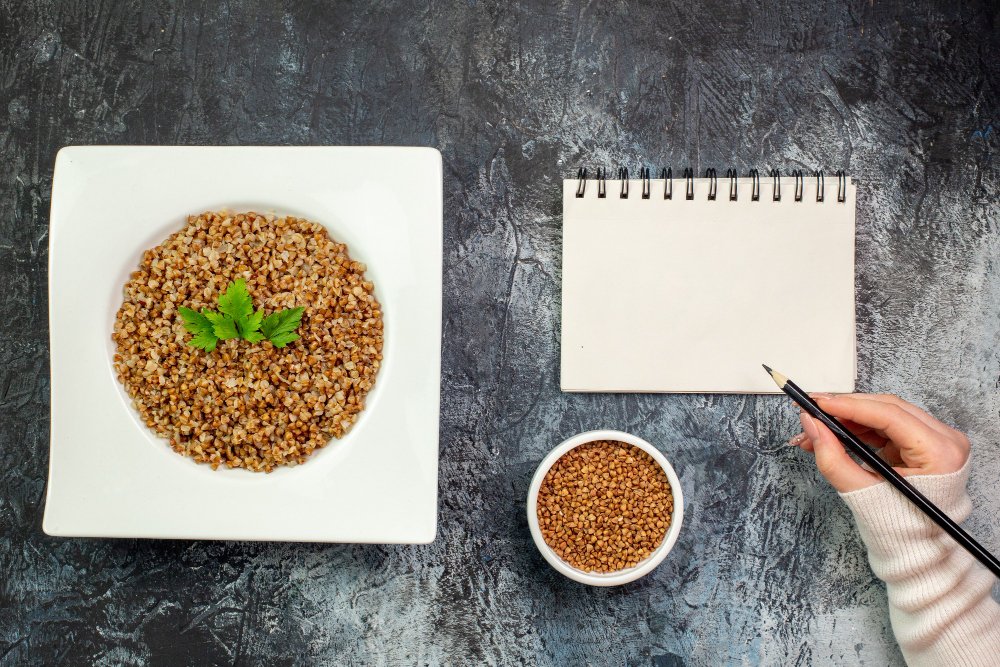
Teff (Eragrostis tef) is a microscopic grain that is indigenous to Ethiopia and Eritrea. Seeds are less than 1 millimeter in diameter and about the size of a poppy seed. However, don’t let teff’s size fool you. It’s nutritional packed grain has been feeding families in the horn of Africa for generations.
There are three varieties of teff white (magna), brown(key) and mixed (sergegna). Teff can grow in varied climates and is drought resistant, which is one reason it continues to be a major food security crop in Ethiopia. Teff accounts for nearly a fourth of all cereal production in Ethiopia. (International Food Policy Research Institute)
In Ethiopia teff is most often fermented and turned into injera. Injera is a soft spongy flatbread that is used as both eating utensil and dish for most Ethiopian meals.
What Is Millet?
Whole millet is not actually one grain. It’s a collective name for several small-grained cereal crops of the grass family Poaceae. There are several popular varieties like pearl millet (bajra), finger millet (ragi), foxtail millet and finger millet etc.
Millet has been grown throughout Asia and Africa for more than 7,000 years. India is still one of the leading producers and consumers of millet grain worldwide. It’s very drought tolerant due to its ability to grow in semi-arid areas with marginal soils where other cereal crops won’t grow.
At CMS Industries we offer millet in several varieties. Our bajra (green, grey, red and yellow) and finger millet is sourced from all over India and sold to customers worldwide.
Teff vs Millet: Nutritional Comparison
Let’s break it down nutrient by nutrient.
Calories and Macronutrients
One cup of cooked teff has about 255 calories, 10 grams of protein, 50 grams of carbs and 4 grams of fiber according to the USDA FoodData Central database. 100 grams of raw millet provides about 378 calories, 11 grams of protein, 72.8 grams of carbs and 8.5 grams of dietary fiber.
Gram for gram, they provide about the same amount of protein. Millet wins slightly in fiber content. Fiber is important for gut health and blood sugar management.
Calcium
Teff shines here. Three-quarters of a cup of cooked teff porridge contains about 87 mg of calcium . That’s a higher amount than most grains. Finger millet (ragi) has the highest calcium content and is silhor better than wheat rotis of all millets with 300 to 350 mg per 100 grams (PMC11091339), about 10 times more calcium than wheat by a review published in Frontiers in Nutrition in 2024.
Winner for calcium: Finger millet, with teff as a respectable runner-up among other millet types.
Iron
Long thought to be high in iron, research confirms teff flour contains roughly 37% DV for iron per 3.5 oz (100g) serving. (Source: Oregon State University Extension Service) Additionally, brown (red) teff contains more iron than white varieties.
Pearl millet tops millets with approximately 5 to 6.5 mg of iron per 100 grams. (Source: PMC11091339 Published in Frontiers in Nutrition)
One caution: like millet, teff also contains phytic acid and can diabatic patient eat maize which inhibits absorption of iron. Fermentation or soaking prior to cooking deactivates phytic acid and allows minerals to be better absorbed.
Winner for iron: Teff (overall), though pearl millet competes closely.
Fiber
Millet provides approximately 8.5 grams of dietary fiber per 100 grams (raw) value per USDA values provided by SnapCalorie. Teff also packs a hefty fiber punch; one study cited in PMC (National Center for Biotechnology Information) discovered that teff injera contained about 2.58 grams of crude fiber per 100 grams (cooked), with total fiber amounts surpassing many different grains.
Winner for fiber: Millet (raw comparison), though both grains support healthy digestion well.
Glycemic Index
The glycemic index of teff is low. Recent research that included a review published in PMC (“How to cite…”, article PMC9416382, 2022) showed that all types of teff ranked as low GI, making it appropriate for blood sugar management. Fermentation of injera brings the GI even lower still.
Millet has a mixed GI profile. Boiled pearl millet, at about 71 on the GI scale, lands squarely in medium territory. Foxtail millet and some others trend lower. Millet flour porridge climbs over 100 for some recipes (“Glycemic Index list …”, cited in University of Sydney Glycemic Index Research program).
Winner for blood sugar control: Teff, especially when consumed fermented or cooked whole.
Protein Quality
Each grain is a source of plant-based protein. However, it’s important to consider the amino acid profile of plant proteins. As noted by an IFPRI study on the nutritional composition of teff, teff contains eight essential amino acids and contains a respectable amount of lysine, an amino acid that is commonly limited in cereal grains. Millet contains more essential amino acids than most cereals grains and also has a relatively good protein profile per Healthline’s nutritionally reviewed overview of millet.
Winner for protein quality: Slight edge to teff due to lysine content.
Gluten Content
Neither of these grains contain gluten. If you have celiac disease or are sensitive to gluten you can eat both. Teff is not genetically related to wheat at all. It’s commonly suggested by registered dietitians as a gluten-free whole grain option ( The Healthy , reviewed by Jessica Levinson, RDN, 2021).
Winner: Tie — both are genuinely gluten-free.
Health Benefits of Teff
Here is why teff earns attention beyond just its amino acid profile:
Bone health. Teff’s calcium content supports bone mineral density. This makes it particularly useful for people at risk of osteoporosis.
Blood sugar management. The low GI and high fiber content help slow glucose absorption. A 2022 narrative review in PMC (PMC9416382) confirmed that teff is a suitable daily grain for people with diabetes.
Iron and anemia. Research links teff consumption to lower rates of iron deficiency anemia, particularly in pregnant women in Ethiopia, according to Healthline’s medically reviewed overview of teff flour (May 2020).
Gut health. The fiber in teff feeds beneficial gut bacteria and supports regular digestion.
Health Benefits of Millet
Millet brings its own strong case to the table.
Heart health. Millet is rich in soluble fiber, which binds to fat in the gut and helps lower blood cholesterol, according to WebMD’s medically reviewed article on millet (reviewed by Zilpah Sheikh, May 2024). It also supplies magnesium, a mineral that supports blood pressure regulation.
Antioxidant protection. Millet contains phenolic compounds particularly ferulic acid and catechins that act as antioxidants and protect against oxidative stress. Darker varieties like finger, proso, and foxtail millet carry higher antioxidant levels, per Healthline’s reviewed guide on millet (May 2023).
Strong bones. Finger millet (ragi) deserves a special mention here. Its calcium content at 300 to 350 mg per 100 grams makes it one of the best plant-based calcium sources in the cereal world.
Digestive support. With 8.5 grams of fiber per 100 grams (raw), millet supports consistent digestive function and may reduce the risk of constipation and bowel disease, according to research cited in Frontiers in Nutrition (PMC11091339).
B vitamins. Millet carries solid amounts of thiamine (B1), niacin (B3), riboflavin (B2), and pyridoxine (B6), all of which support energy metabolism, brain function, and healthy cell production.
Teff vs Millet: Side-by-Side Summary
| Nutrient / Factor | Teff | Millet |
| Protein (per 100g raw) | ~13g | ~11g |
| Dietary Fiber | High | Higher (8.5g raw) |
| Calcium | Good | Excellent (finger millet) |
| Iron | High (esp. red teff) | Good (esp. pearl millet) |
| Glycemic Index | Low | Medium (varies by type) |
| Gluten-Free | Yes | Yes |
| Lysine (amino acid) | Higher than most cereals | Moderate |
| Antioxidants | Polyphenols, phytates | Ferulic acid, catechins |
| Best For | Blood sugar, iron, bone | Heart health, calcium, fiber |
Which Grain Is Better for Specific Health Goals?
Managing blood sugar or diabetes: Go with teff. Its consistently low GI and high fiber content make it a safer daily grain choice than most millet varieties.
Bone strength: Reach for finger millet (ragi). Nothing in the cereal world matches its calcium density. Teff is a solid second choice among other grains.
Heart health: Millet wins here, thanks to its soluble fiber and magnesium content.
Iron deficiency or anemia: Teff, particularly red/brown teff, has the stronger track record. Just pair it with a source of vitamin C to boost absorption.
Digestive health: Both work well, but millet’s higher raw fiber content gives it a slight edge.
Gluten-free diet: Both are safe and genuinely gluten-free whole grain options.
How to Eat Teff and Millet
Teff cooks in about 15 to 20 minutes as a porridge. You can also find it as flour for baking bread, pancakes, muffins, or cookies. Whole grain teff stores well in a cool, dry, airtight container for up to a year.
Millet works as a rice substitute, porridge base, or flour for flatbreads and baked goods. It can also be fermented into probiotic beverages. Cook millet as you would quinoa simmer in water until absorbed, about 15 to 20 minutes.
At CMS Industries, you can source multiple millet varieties including finger millet, green bajra, red bajra, and yellow bajra, all machine-cleaned and sorted for quality.
The Bottom Line
Both teff and millet are healthy grains. Neither is inherently “healthier” than the other. It depends on what your body is lacking.
Here’s how they stack up against each other: Teff wins when it comes to blood sugar management, iron levels, and lysine-rich protein. Millet has more fiber per serving, more bioavailable calcium (from finger millet), and more diverse antioxidants (when you consider all millet varieties). By including both grains in your diet—perhaps eating one weekly rather than every day—you get the full spectrum of nutrients.
Want to purchase pure, high-quality millet for yourself, food production, or export? CMS Industries provides numerous millet options sourced directly from India.
Frequently Asked Questions
1. Is teff or millet better for weight loss?
Both grains support weight management because of their fiber and protein content, which increases feelings of fullness. Teff has a lower glycemic index than most millet types, which helps control hunger and reduce blood sugar spikes. Millet’s higher raw fiber content (8.5g per 100g) also helps with satiety. Portion size and preparation method matter too plain cooked grain beats flour-based products in either case.
2. Can people with diabetes eat teff and millet?
Yes, both grains can fit into a diabetes-friendly diet, but teff is the more consistent choice. All varieties of teff have a low glycemic index, as confirmed by multiple published studies. Pearl millet has a medium GI of around 71, while some millet preparations push the GI much higher. People with diabetes should choose whole grain forms of both and monitor individual blood sugar responses.
3. Which grain has more protein teff or millet?
Teff carries slightly more protein than millet. Half a cup of uncooked teff contains nearly 13 grams of protein. Raw millet provides about 11 grams per 100 grams. More importantly, teff contains relatively higher levels of lysine, an amino acid most cereal grains lack making its protein profile stand out among grains.
4. Is teff or millet better for bone health?
Finger millet (ragi) wins for bone health. It delivers 300 to 350 mg of calcium per 100 grams, roughly ten times the calcium in wheat. Among all cereal grains, it leads on calcium. Teff is also a good calcium source among everyday grains, making it a better choice than most other cereals if finger millet is not available.
5. Are teff and millet safe for people with celiac disease?
Yes. Both teff and millet are naturally gluten-free and contain no wheat, barley, or rye proteins. Registered dietitians often recommend them as safe alternatives for people with celiac disease or non-celiac gluten sensitivity. Always check that the specific product you buy is processed in a gluten-free facility, as cross-contamination can occur during manufacturing.