Open an Indian pantry, and you may see two small jars side by side. One has kala til, shiny and jet black. The other bears are brown, warm and tan. They taste a little differently, they smell a little differently, and yet many cooks interchange them without knowing what changes.
So, let’s talk about it. This guide compares black and brown sesame seeds in terms of appearance, taste, nutrition, uses in cooking, and buying tips. It also looks at what lab studies are saying, because the research doesn’t always match up with what you read online. All figures are sourced (by name), and the complete list is at the end.
Black vs Brown Sesame Seeds at a Glance
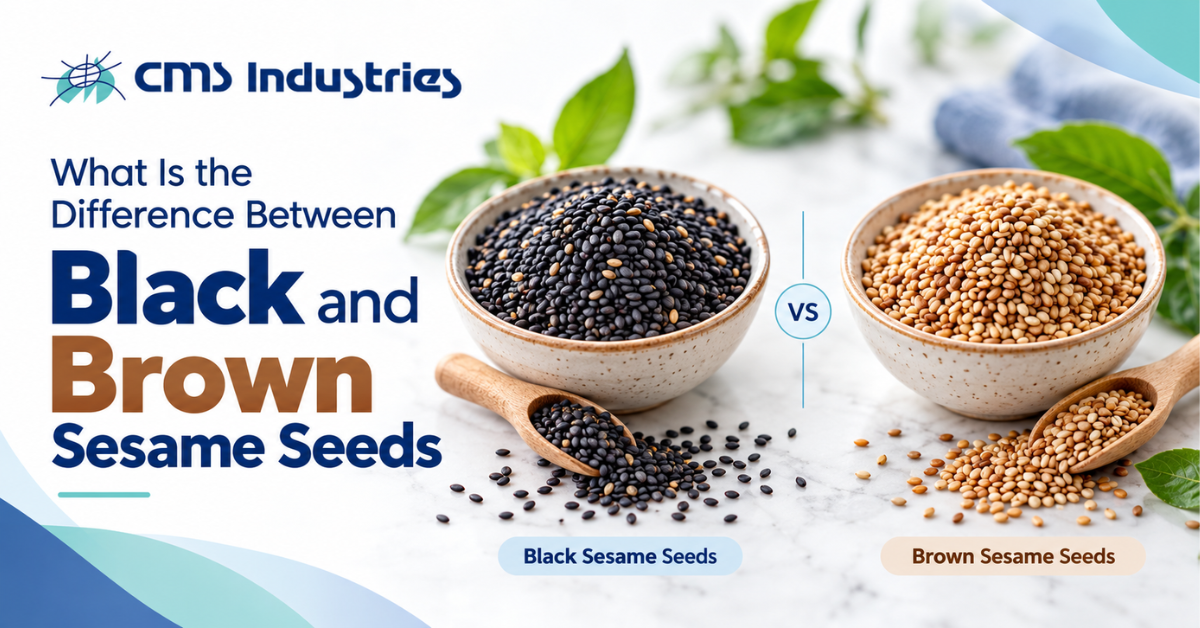
Black and brown sesame seeds are from the same plant, Sesamum indicum. The only difference is in the colour of the seed coat. That colour also affects flavour, appearance, and how cooks use each seed. The black seeds are more potent and a little bitter. Brown seeds are milder in taste and nutty.
| Feature | Black sesame | Brown sesame |
| Plant | Sesamum indicum | Sesamum indicum |
| Seed coat | Dark, usually left on | Tan to brown, usually left on |
| Hindi name | Kala til | Brown till |
| Flavour | Strong, earthy, a little bitter | Nutty, mild to medium |
| Look at food. | Bold black specks | Soft golden-brown specks |
| Common use | Rituals, Sankranti sweets, East Asian desserts, garnishes | Ladoo, chikki, breads, chutney powders, oil |
Consider the table as a general pattern. The taste depends on the kind, the place of origin, and the roasting.
What Is the Difference Between Black and Brown Sesame Seeds?
Begin with the coat. Since the coat contains the pigment, black seeds have a dark coat, and brown seeds have a tan to brown coat. White seeds are generally hulled seeds with the coat removed or a naturally occurring pale variety. As per Vikaspedia, the knowledge portal of the Government of India, India produces sesame with white, brown, and black seed coats. Indian buyers have three to pick from.
- Flavours. Black sesame has a more robust, earthy, and slightly bitter flavour. Brown sesame is nutty and rounder in taste. Roasting softens them both.
- Texture. Both tend to keep their coat, and so both offer a light crunch that dehulled kernels don’t.
- See. Black seeds are especially noticeable on pale foods like rice, bread and ice cream. Brown seeds blend in for a warm golden finish.
- Utilise. Cooks reach for black seeds when the look or a bold flavour counts. They are used in sweets, breads and chutneys for a mild nutty note in the brown seeds.
Nutrition: Is Black or Brown Sesame Healthier?
Here comes the honest start. USDA FoodData Central does not distinguish sesame by colour. Its entry for whole dried sesame seed is the best baseline for any unhulled seed, black or brown. According to that entry, per 100 g there is:
- Energy: 573 calories
- Fat: 50 g
- 18 g Protein
- Fibre: 12g
- Calcium: 980 mg (75% RDI)
- Iron: 14.6 mg (81% Daily Value)
- Magnesium: 350 mg (84% Daily Value)
A tablespoon weighs about 9 g, so a spoonful provides about 52 kcal and 88 mg of calcium. Those two figures are our own calculations based on USDA numbers, so treat them as estimates.
When you look at lignans, the colour begins to matter. Sesamin, sesamolin and sesamol are lignans, plant compounds that are known to act as antioxidants. They have been measured in brown sesame seeds, black and white seeds, with contradictory results.
- Indian study (2019): Researchers studied sesame grown in different regions of India for three crop seasons. The black seeds had higher amounts of sesamin, sesamolin, total lignans, and oleic acid than the white and brown seeds.
- Korean study (2014): Total lignan content was 7.36 mg/g (white cultivars) and 3.10 mg/g (black ones). Even at that time, black extracts showed higher antioxidant values. The authors cautioned that antioxidant effects may not correlate tightly with lignan content.
- An ICAR study: Sesamol was found to be almost equal in whole seeds in white (5.60 mg/kg) and black (5.65 mg/kg) seeds.
- So who wins? That’s why the answer isn’t clear yet. “Numbers vary with variety, growing area, and crop year. The black seed of one farm is not the same as that of another.
- The oil content followed the same pattern. In 2020, a study on Indian sesame accessions revealed oil content ranging between 39 and 49%, with the maximum spread among brown- and black-seeded types. The colour does not tell you how much oil is in a seed.
What to do next with your plate: think of them both as nutritious seeds high in minerals. Black may come out ahead on some antioxidant measures in some Indian varieties, but that’s a lab result. It does not show a health outcome in people. Sesame is also calorie-dense, so just a spoonful or two will do. If you have a medical condition, talk to your doctor or dietitian before making changes to your diet.
How to Use Black and Brown Sesame in the Kitchen
Where Black Sesame Shines
- Where Black Sesame Reigns: Puja rituals and sweets for Makar Sankranti.
- Chinese and Japanese food: Sesame pastes and sweets.
- Toppings for rice, noodles, salads and soups.
- Crunches and Coatings. The dark specks are impressive.
Where Brown Sesame Shines
- Ladoo of Jaggery, chikki, and Gajak.
- Toppings for paratha, naan and bread.
- Dry Chilli, Garlic and Salt Chutney Powder.
- Cooking oil, salad dressing, and tempering.
How to Roast Black and Brown Sesame
- Heat a dry kadhai or heavy pan on a low flame.
- Add the seeds in one layer. Leave out the oil.
- Stir for 2 to 3 minutes.
- Look for brown seeds, slightly darker. Black seeds don’t colour much, so put them on your nose and listen for a light popping.
- Tip the seeds onto a plate immediately, as a hot pan will continue to cook them.
- Let cool completely before grinding or storing.
Can you trade one for the other? Yes, in most recipes. Keep the same amount. The black seeds will have a stronger taste, a little bitter, and a darker appearance.
How to Choose Between Them
- Choose black for a dramatic look, East Asian desserts, ritual use, or a bold flavour.
- Use brown for a softer, nutty taste in sweet foods, breads and chutneys.
- If you cook broadly, keep both. Both are generally sold with the coat on.
- Skip both of these if you or your family have a sesame allergy.
How to Buy and Store Black and Brown Sesame Seeds
Good seed needs a little tending at the shop. Before you pay, check these out:
- Colour: Black or even tan to brown, with a little dusting.
- Cleanliness: Free from stones, husk, soil, or insect marks.
- Aroma: Light, nutty. If it has a sour, bitter, or paint-like smell, the oil is rancid.
- Dryness: Seeds free-flowing, not caking, not damp.
- Label: Packing date; on packaged food, a sesame allergen statement.
Then keep them well. Store in an airtight jar or tin, away from heat, light and dampness. Large quantities should be stored in the refrigerator. Smell the seeds before use each time and discard any that smell off.
Sourcing in Bulk
Kilos are bought by home cooks. Food manufacturers, retailers and importers buy by the tonne, and they need to know about cleaning, packing and shipping.
CMS Industries is an exporter of oil seeds based in Kachchh, Gujarat. These oil seeds include black sesame seeds and brown sesame seeds. The range includes white, hulled, natural, roasted, and double-skin red natural sesame. On its brown sesame page, the company mentions Sortex, machine cleaning, and packing in 15, 25, 40, and 50 kg sizes in PP, BOPP, or jute bags with custom printing. Specifications may vary between varieties and may change over time, so check with any supplier for the current details of each before you place an order.
Sesame Allergy: What to Know
Sesame is safe for most people, but some people can have serious allergic reactions. “FDA declares sesame the ninth major food allergen under the FASTER Act.” Beginning January 1, 2023, packaged foods and dietary supplements sold in the United States will need to declare sesame on the label. The allergy risk is the same for black and brown seeds.
Not all products had the new label immediately, so those with sesame allergies should check every ingredient list. If you and your child are allergic to sesame, talk to your doctor before trying a new sesame product.
Next Steps
Black and brown sesame seeds have the same plant, the same crunch, and a long list of minerals. They differ in taste, looks, and, in some studies, antioxidant levels. There is no clear winner either.
Getting started is easy:
- Buy a small pack of each and smell them.
- Roast a tablespoon of each and then taste them side by side.
- Black for flavour and appearance, brown for a soft nutty note.
- Store in a cool, dark location. Store airtight.
- If you are buying in bulk, compare cleaning methods, pack sizes and labelling between suppliers, including the CMS Industries product pages.
Frequently Asked Questions
What is the main difference between black and brown sesame seeds?
Colour of the seed coat. The black seeds are darker, with a more intense, earthy, and slightly bitter taste. Brown seeds have a tan to brown coat and taste nutty and mild. Both come from the same plant and will work in most recipes.
Which is healthier, black or brown sesame?
Both are high in minerals, fibre, and unsaturated fats. Some studies report black seeds with higher lignans or antioxidant values, but other studies have mixed results. Variety and where it is grown matter. Eat the one you like, in small quantities.
Is kala the same as black sesame seeds?
Yes. Kala til is the Hindi name for black sesame seeds. It is used by Indian households in Makar Sankranti sweets and many ritual foods. It can also be found in sesame pastes and desserts throughout East Asia.
Can I use black sesame instead of brown in a recipe?
Yes, generally. Exchange them in equal amounts. Black seeds are stronger, with a slightly bitter taste and a dark speckled look. If you eat light sweets or pale bread, you might see the difference, so start with a smaller amount.
Do black and brown sesame seeds need different storage?
Nope. Store both in an airtight container in a cool, dark place. Refrigerate large batches. Smell before you use it. If the oil smells sour, bitter, or like paint, it’s gone rancid, and you should throw away the seeds.