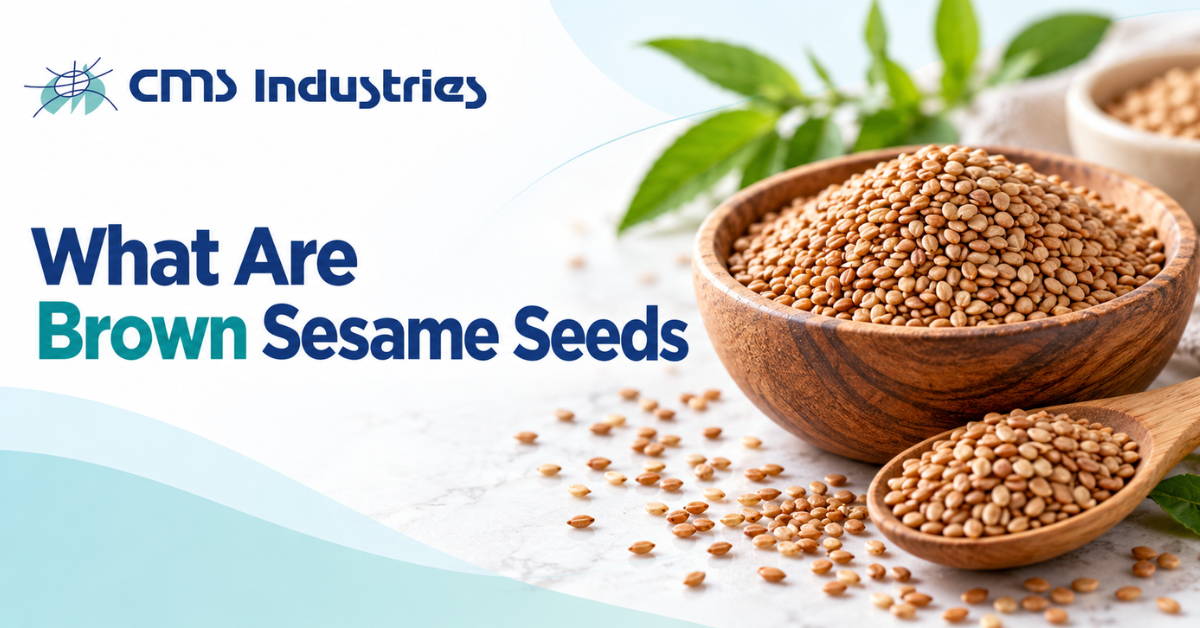
You’ve probably eaten them without thinking twice. Sprinkle on a bread roll, spoon in a til ladoo, and pinch in a dry chutney. Brown sesame seeds are small, flat, tan to golden-brown seeds from the sesame plant. They are found in kitchens throughout India and the world.
Let’s break it down. This guide explains what they are, how they differ from white and black sesame, what the nutritional facts are, how to cook with them, and what to look for when buying. All figures are from named sources, and a full list appears at the end.
Brown Sesame Seeds at a Glance
Brown sesame seeds are sesame seeds (Sesamum indicum) with the tan to brown outer coat intact (un-hulled). They have a nutty, a bit earthy flavour and are about 50% oil by weight.
Here’s the quick version:
- Plant: Sesamum indicum; Hindi Name: til
- Look for tan to golden brown, small, flat, oval seeds.
- Flavour: Nutty, somewhat earthy, and a little more robust than hulled white seeds.
- Fat content: ~ 50 g per 100 g (according to USDA data).
- It is used commonly for sweets, breads, chutneys, tempering, and cooking oil.
Where Brown Sesame Comes From
India is the top country for sesame. According to the Government of India’s knowledge portal, Vikaspedia, India stood first in sesame production in 2016, although Sudan produced it in a larger area. It is grown by farmers in Madhya Pradesh, Uttar Pradesh, West Bengal, Rajasthan, Gujarat, Tamil Nadu, Karnataka, Andhra Pradesh, Telangana, Maharashtra and Odisha. Yields vary from 224 to 933 kg per hectare, depending on local growing conditions.
Indian farmers produce white, brown, and black seed-coat sesame, as confirmed in the same source. The colour and flavour of each lot vary with growing region, variety, and harvest time, so two bags of brown til might taste a bit different.
Til also has cultural importance in India. Families make til-gud sweets for Makar Sankranti, and sesame is used in many festival and puja dishes.
Brown vs White vs Black Sesame: What Changes?
Colour is the first clue, but the hull is what really sets it apart. Hulling removes the outer coat and results in a smooth white kernel. Brown seeds retain the coat, which gives them more texture and a richer flavour. Black seeds have a dark coat and taste even stronger. White seeds are hulled kernels or natural pale varieties.
| Type | Seed coat | Flavour | Common use |
| Brown | Intact, tan to brown | Nutty, slightly earthy | Til ladoo, chikki, breads, oil |
| White | Hulled or naturally pale | Mild, lightly sweet | Bakery items, sweets, pastries |
| Black | Intact, dark | Strong, a little bitter | Garnishes, desserts, East Asian dishes |
Take this table as a general pattern. Details vary with different varieties and growing regions.
Brown Sesame Seeds Nutrition Facts
USDA FoodData Central does not differentiate sesame by colour. The following figures are for whole dried sesame seeds with the hull on (the way brown seeds are sold). 100 g contains the following:
- Energy: 573 calories
- Fat: 50 g (22 g polyunsaturated, 19 g monounsaturated and 7 g saturated)
- Protein: 18 g
- Carbohydrate: 23 g, of which sugars are 12 g
- Calcium: 980 mg (75% DV)
- Iron: 14.6 mg (81% Daily Value)
- Magnesium: 350 mg (84% of Daily Value)
- Zinc: 7.8 mg (70% of the Daily Value)
- Copper: 4.1 mg (454% DV)
- Manganese: 2.5 mg (107% DV)
No one will eat 100 g at one time. One tablespoon is 9 g, so one spoonful supplies about 52 kcal, 1.6 g of protein, and 88 mg of calcium. Take those figures as an estimate; they are our own calculations from the USDA numbers.
Here is why the hull is important. USDA data for hulled sesame kernels show only 60 mg Ca and 6.4 mg Fe per 100 g. The gap shows that the coat holds most of the calcium and a good deal of the iron. If you want minerals, whole brown seeds have more than hulled ones.
Health Benefits of Brown Sesame
Numbers don’t tell the whole story — but they do point to a few clear strengths.
- Small teaspoon of minerals. Sesame is a good source of magnesium, copper, manganese, zinc, and iron. Magnesium alone is 84% of the daily value per 100 g.
- Protein from plants. Sesame adds protein to vegetarian meals at 18 g per 100 g. You will be eating it in small quantities, so think of it as a booster, not a main source.
- Fibre. The 12 g per 100 g makes for satisfying meals and, with enough water, helps with digestion.
- Mostly unsaturated fat profile. Sesame consists mainly of unsaturated fat, with about 22 g polyunsaturated and 19 g monounsaturated per 100 g, compared to 7 g saturated.
Sesame is high in calories, so a little goes a long way. No one seed cures or prevents a disease. If you have a health condition such as diabetes, kidney problems, or a mineral deficiency, consult your doctor or dietitian before changing your diet.
How to Use Brown Sesame in an Indian Kitchen
Best is brown till you wake up; its flavour heat does it.
How to Roast Brown Sesame at Home
- Heat a dry kadhai or heavy pan on low heat.
- Add the seeds in one layer. No oil.
- Keep stirring for two or three minutes until the seeds are a shade darker and smell nutty.
- Tip them straight onto a plate. Seeds will continue to cook in a hot pan and can burn in seconds.
- Allow them to cool completely before grinding or storing.
Everyday Ways to Use Them
- Make ladoo, gajak or chikki with jaggery.
- Mix till and jaggery for Makar Sankranti sweets.
- Sprinkle seeds into parathas, naan, khakhra or bread before baking.
- Roast the seeds and grind them with dry chilli, garlic and salt to make a dry chutney powder.
- Add a spoonful to poha, upma, or salad dressing.
- Roasted seeds can be made into a smooth paste, like tahini, for dips and dressings.
Grind in small batches. Ground seeds go stale faster than whole.
Why the Oil Matters
For thousands of years, people have been pressing sesame for oil because half of each seed is fat. Til oil, or gingelly oil, is a household staple in many Indian homes, particularly in the south, where it is used by cooks for tempering, frying, and pickles. For more information, see whether black sesame seeds and kalonji are the same. Roasting the seeds first will produce a darker oil with a more pungent aroma.
The whole seeds go rancid if you leave them out in a warm, bright spot, also because of that oil-rich character. We will now look at storage, which is important.
How to Buy and Store Brown Sesame Seeds
Good seeds need a bit of attention at the store. What to check before you pay:
- Colour: Even tan to brown, with a little dust.
- Cleanliness: Free from stones, husks, soil, and insect stains.
- Aroma: Light, nutty. If it has a sour, bitter, or paint-like smell, the oil is rancid.
- Dryness: Seeds free-flowing, not caking, not damp.
Then store them well:
- Then keep them safe.
- Keep in an airtight jar or tin.
- Keep the jar away from heat, light, and moisture.
- Keep bulk in the fridge or freezer.
- Before each use, smell the seeds and discard any that smell bad.
Sourcing in Bulk
Home cooks buy in kilos. Food makers, retailers and importers buy in tonnes, and they ask different questions. How is the lot swept? How packed is it? How is it shipped?
Kachchh, Gujarat exporter CMS Industries, lists brown sesame on its site, along with black, white, hulled, natural, roasted and double-skin red natural sesame. The product page states that the seeds are cleaned by a Sortex and machine, packed in 15, 25, 40, and 50 kg in PP, BOPP, or jute bags, with the possibility of custom printing. Because specifications change, check with any supplier for current details before ordering.
Sesame Allergy: What to Know
Sesame is safe for most people, but some people can have serious allergic reactions. The U.S. Food and Drug Administration has added sesame to the list of the nine major food allergens under the FASTER Act. Beginning January 1, 2023, packaged foods and dietary supplements sold in the U.S. will have to include sesame on the label.
Not all products were immediately labelled with the new designation, so anyone with a sesame allergy should check every ingredient label carefully. If you or your child are allergic to sesame, please consult a physician before consuming any new sesame product. If you export or you are a food brand shipping to the U.S., these labelling rules should be on your radar.
Next Steps
Brown sesame is a simple, ancient, real nutritional powerhouse ingredient. The hull, containing most of the calcium and iron in the USDA numbers, is retained in whole seeds. A tablespoon adds flavour, minerals, and a bit of protein with little effort.
Here’s how to begin:
- Buy a small packet of seed that is clean and dry, and smell it.
- Roast a spoon and add to your next paratha, chutney or sweet.
- Keep the remainder in an airtight container, out of light and heat.
- If you are buying in bulk, ask for current specifications and compare cleaning methods, packing sizes and labelling across suppliers (for example, on the product pages of CMS Industries).
Frequently Asked Questions
What is the difference between brown and white sesame seeds?
The hull is the difference. Brown seeds retain their tan outer coating, so they taste nuttier and have more calcium than hulled seeds. White seeds are either hulled or naturally light in colour and have a more delicate flavour. Both work in most recipes, so go for flavour.
Is brown sesame good for you?
They provide protein, fibre, unsaturated fat and minerals including magnesium, iron and calcium. They are also high in calories, so a day or two a day is sufficient. People allergic to sesame should avoid them. Consult your doctor about any health condition.
Should I roast brown sesame before eating it?
Optional, but worth the grill. Heat in a dry pan on a low flame for two to three minutes. The result is a nutty aroma and a light crunch. The heat of the oven or pan does the work, so raw seeds are handy for baking and cooking.
How long does brown sesame stay fresh?
They will last several months if kept in a cool, dark place inside an airtight container. The fridge gives time. Follow your nose. If the oil smells sour, bitter, or like paint, the oil has gone rancid, so toss the seeds.
Is sesame a major food allergen?
Yes, in the US. Sesame is the ninth major food allergen as defined by the FDA, and since January 2023, packaged foods have been required to declare it on the label. If you have an allergy that you know of, read every label and ask your doctor.