
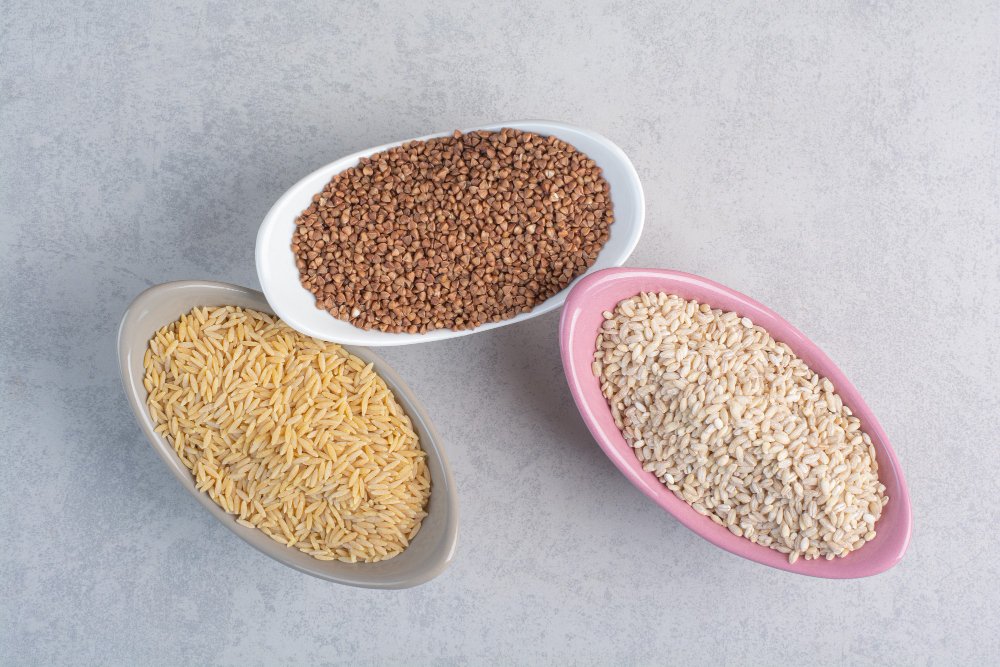
Walk into your neighbourhood grocery and you will see plenty of wheat flour, rice, oats and corn. Indeed these are cereals that we grew up eating. But quietly these past few years, another category of grains has been creeping back in: millets. Pearl millet, finger millet, foxtail millet, barnyard millet, sorghum….these names are popping up health food stores, recipes and even in official documents on government food policy.
But what exactly are millets? How are they different from cereals? Are they a different group of food altogether, or are millets a sub-set of cereals? And if we go one step further, does it really matter if you eat a cereal or a millet?
Let’s dig in……
What Are Cereals? The Basics First
The word “cereal” comes from Ceres, the Roman goddess of agriculture and harvest. In modern food science, cereals refer to edible grains belonging to the grass family Poaceae, cultivated primarily for human consumption. They are the world’s most produced food category by volume.
The most commonly grown cereals worldwide are:
- Wheat — used for bread, pasta, and flour-based foods
- Rice — a staple for more than half the world’s population
- Maize (corn) — consumed directly and processed into dozens of food products
- Barley — used in brewing, animal feed, and some human foods
- Oats — popular as a breakfast grain in Western diets
- Rye — common in Northern and Eastern European breads
These grains share a few traits. They are mostly high in carbohydrates, provide moderate protein, and are grown at large scale on irrigated land. Wheat, rice, and maize together account for the majority of global calorie intake.
What Are Millets? And Are They Cereals?
That’s where a lot of the confusion comes in. Millets are cereal grains. They’re part of the Poaceae grass family. However when people refer to “cereal” they’re usually talking about the three dominant staple crops: wheat, rice and corn. Finger Millets fall into their own older category sometimes referred to as “coarse grains” or “nutri-cereals.”
Millets are small-grained, drought-resistant grasses. They’ve been grown for thousands of years throughout Asia and Africa, and were once the dominant grain source for much of the world long before wheat and rice. In fact in 2023 the United Nations Food and Agriculture Organization (FAO) spearheaded International Year of Millets to bring attention back to these grains.
The main millet varieties include:
- Pearl millet (Bajra) — the most widely grown millet globally
- Finger millet (Ragi) — especially common in South India and East Africa
- Foxtail millet (Kangni) — one of the oldest cultivated crops
- Sorghum (Jowar) — grown across Africa, India, and the Americas
- Barnyard millet (Bhagar/Sama) — used as a fasting food in India
- Kodo millet — grown in the Deccan plateau of India
- Little millet — a minor crop found across South Asia
So the short answer: all millets are cereals, but not all cereals are millets. Think of millets as a specific, older, nutritionally richer sub-group within the broader cereal family.
Cereals Vs Millets: Side-by-Side Nutritional Comparison
This is where the conversation gets interesting. Let’s look at what the research says about how these two grain groups stack up nutritionally.
Carbohydrates and Glycemic Index
Cereals and millets are both high-carbohydrate foods. Of course they are. No argument there. But not all carbohydrates are equal. They don’t raise blood sugar at the same rate.
White rice, for example, has a glycemic index of about 72. Refined wheat bread is around 74. These are considered high-GI foods, which means your body digests them quickly and they raise your blood sugar rapidly.
Most millets, on the other hand, are low to medium on the GI index. Researchers recently conducted a meta-analysis of 65 international studies, published in Frontiers in Nutrition (PMC8355360), that determined the mean GI of millets was about 52.7. That’s about 36% lower than milled rice and refined wheat. Barnyard millet has a GI between 41 and 50, which is considered low.
Millets with lower mean GI values, like barnyard and foxtail, lowered dietary GI 35 to 79% better than typical cereal controls such as white rice and wheat bread.
If you’re watching your blood sugar, that matters.
Protein
White rice and other cereals have about 6 – 7 grams of protein per 100 grams. Same goes for maida (refined wheat flour). Millets have slightly higher protein and foxtail millet better than rice content ranging from 8 – 12 grams per 100 grams depending upon the variety, and also have higher quality protein. Millets have higher quantities of essential amino acids when compared to polished rice or maida.
Dietary Fiber
This has got to be one of the easiest wins for millets over rice/flour (cereals vs millets). White rice has less than 1 gram of dietary fiber per 100 gram serving after milling. The same goes for refined wheat flour. .
Minimal processing of millets means you still get all that fiber-rich bran and germ intact. Barnyard millet actually has the highest quantity of crude fiber among all millets. And that fiber helps control (a slow rise in) blood sugar after eating barnyard millet, making it great for people with diabetes and heart disease. .
Total dietary fiber in millets ranges from 6 to 15 grams per 100 grams across different millets. That’s quite a difference from polished rice or white flour!
Iron, Calcium, and Micronutrients
Pearl millet provides 3 to 4 mg/100 g zinc and 4 to 8 mg/100 g iron. Finger millet has 344 mg/100 g calcium. This is one of few plant sources of calcium outside dairy foods and steam rice good for skin with significant levels of calcium. Typical cereals such as white rice and refined wheat rate poorly on most micronutrients after processing. Commercial cereal products are often fortified with synthetic vitamins. Millets skip this step as micronutrients remain in the grain when just lightly milled.
Gluten
Wheat, barley, and rye all have gluten. Gluten-free grains for those with celiac disease or gluten sensitivity include rice and corn. Gluten-free grains also include all varieties of millet. Millet is a great alternative because it is broader and more nutritious than just rice or corn.
Growing Conditions: Where Millets Have a Clear Edge
Beyond nutrition, there’s one more angle to compare cereals vs millets. That is how they grow.
Wheat needs 100 to 300 cms of water in the form of rainfall or irrigation each season. Rice needs paddies which can be flooded with water. Millets need very little precipitation or watering, just 20 to 60 cm as compared to rice which needs 100 to 300 cm. Research tells us that millets can require up to 70% less water than rice. That’s less strain on freshwater supplies.
Not only that, millets are extremely heat tolerant up to 44 degrees Celsius, drought, and flood tolerant. This makes the hardy crop an ideal candidate for farmers who have to deal with changing weather patterns and uncertain resources due to climate change. The UN General Assembly even declared 2023 to be the International Year of Millets due to these unique qualities!
When you consider food security on a global scale, this becomes extremely important. Water shortages are only going to become more common, as climate change continues to impact global weather patterns. Crops that can grow in rain-fed, low-input areas will have a leg up that water-intensive, large-scale cereal crops won’t.
At CMS Industries in Kachchh, Gujarat we work directly with farmers across India, allowing us to source and supply a variety of grains including many millet variants.
When Are Regular Cereals Still the Right Choice?
The article is not saying millets are good, and cereals are bad. Context is important. Whole grain cereals like oats, brown rice, whole wheat and barley are very nutritious if they’re not refined too much. Oats have a good amount of beta-glucan fibre and have moderate GI. Barley is another high fibre grain that has significant benefits too.
This isn’t the issue with cereals either. It’s what we do to them. Once the wheat is processed into maida or the bran is removed from rice, most of the fibre, minerals and protein are removed too. All you’re left with is mostly carbs that are high on the glycemic load.
Cereals will continue to be the most available, cheapest and globally traded grain. Especially in places that are just trying to get enough calories. High yielding varieties like rice and wheat still fill a role that millets can’t replace on a large scale… not yet atleast.
Practical Ways to Replace or Supplement Cereals With Millets
You do not need to overhaul your diet overnight. Here is how to bring millets in gradually:
Replace white rice once or twice a week with cooked bajra, sorghum, or barnyard millet. The texture is similar enough that most recipes work without adjustment.
Switch from maida to ragi flour or jowar flour for rotis, pancakes, or flatbreads. Both have better fiber and micronutrient profiles.
Use foxtail millet or little millet as a base for khichdi or upma instead of semolina or broken rice.
Add millets to soups and stews where the grain acts as a thickener. Pearl millet works especially well in this role.
Start with breakfast. A simple barnyard millet porridge with a handful of nuts is nutritionally far ahead of a bowl of processed cornflakes or puffed rice cereal.
A Note on Sourcing Quality Grains
If you cook cereals and millets at home or procure grains at bulk rates, quality is essential. Less processed grains have higher nutritional value. Fresh grains that are stored well last longer and preserve their minerals.
At CMS Industries, we provide quality graded grains such as various millets and cereals to wholesalers and retailers worldwide. We work with farmers in Gujarat and other states to procure top quality agro-commodities.
Frequently Asked Questions About Cereals Vs Millets
Q1. Are millets the same as cereals, or are they different?
Millets are a type of cereal grain, so technically they fall under the broader cereal category. In everyday use, “cereals” usually refers to major staples like wheat, rice, and corn. Millets are a distinct group of smaller, older, drought-resistant grains within the same plant family. They are generally more nutritious than refined cereals but are grown in smaller volumes globally.
Q2. Which is healthier, millets or cereals?
Millets tend to have more fiber, higher protein quality, more micronutrients like iron and calcium, and a lower glycemic index than refined cereals like white rice or wheat flour. Whole grain cereals like oats and barley are also nutritious. The biggest health gap appears when comparing millets to processed cereals, where milling removes most of the nutritional value.
Q3. Can I replace wheat and rice completely with millets?
You can replace a large portion of your wheat and rice intake with millets, and many people do so successfully. Millets work in most dishes that use rice or wheat as a base grain. The main practical challenge is availability in some regions and slightly different cooking times and textures. A gradual, partial replacement is a realistic and effective starting point for most people.
Q4. Are millets better for people with diabetes than regular cereals?
Yes, for most people managing blood sugar, millets are a better grain option than refined cereals. Their lower glycemic index means slower glucose release into the bloodstream. A meta-analysis of 65 studies found that long-term millet consumption lowered fasting blood glucose by 12% and post-meal blood glucose by 15% in people with diabetes. Portion size and preparation method still matter, even with low-GI grains.
Q5. Why are millets less popular than wheat and rice if they are more nutritious?
Several factors contributed to the decline of millets over the past century. High-yield wheat and rice varieties produced more calories per acre, making them more economically attractive. Millets also have a shorter shelf life and are harder to mill into fine flour. Cultural and trade patterns further cemented wheat and rice as global staples. Governments and organizations are now actively working to revive millet cultivation and consumption, with the United Nations designating 2023 as the International Year of Millets.