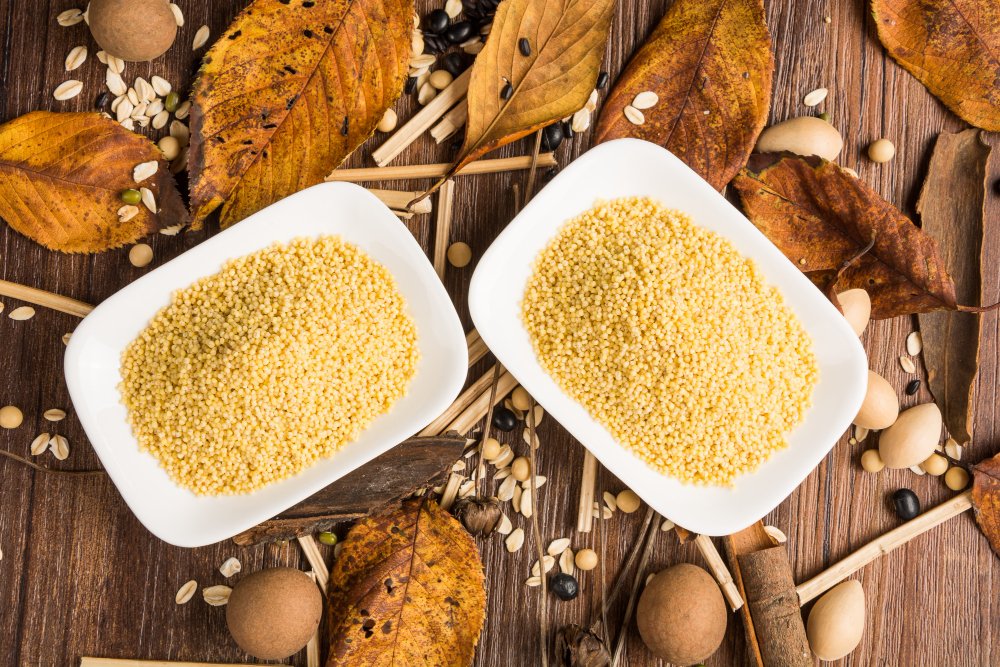
Two healthy grains that start life as cereal grains. Two totally different trajectories from there. Confused about whether you should be eating couscous or millet?
You’re not the only one. They’re both popping up on healthy tables everywhere. You can use both as alternatives to rice, bases for salads, or additions to morning porridge. But they’re different in some important ways. Especially when you’re watching your blood sugar, going gluten-free, or just want the most nutritious whole grain.
Let’s dig into how these grains stack up against each other.
What Is Couscous?
Couscous, actually isn’t even a grain; it’s pasta made from tiny granules of semolina flour milled from durum wheat and steamed until dry. It’s strongly associated with North African cuisines, especially Moroccan cuisine, Algerian cuisine and Tunisian cuisine where it’s traditionally served underneath slow cooked stews. There are three varieties: Moroccan couscous, Israeli couscous (also called pearl couscous) and Lebanese couscous. Moroccan couscous is by far the smallest and most common. Israeli couscous is bigger and has a nuttier chewier flavor and Lebanese couscous are the largest and take the longest to cook. Most couscous you’ll find at the grocery store is pre-steamed and dried so all you need to do is add boiling water and let it sit for about five minutes. Ready. Couscous.
One thing before we get started: Couscous has gluten. Remember how I said it’s made from wheat? Yeah. That.Google Map,Address,Couscous
What Is Millet?
Millet is a type of small seeded cereal grass that is gluten-free. Millets have been grown in Africa and Asia for thousands of years. In India, Nigeria, Ethiopia, and China millet is a primary food source. The most popular types of millet are pearl millet (also called bajra), finger millet (also called ragi), foxtail millet and proso millet. Finger Millet is often confused with couscous. However, millet is considered a true whole grain because it contains the bran and germ. Fiber, minerals and phytonutrients are found in the bran and germ layer of grains. Recent research published in Frontiers in Nutrition (PMC11091339) in 2024 shows that millets provide an average of 7 to 12% protein, 2 to 5% fat, and 8 to 15% fiber. Millets contain a higher percentage of essential amino acids than most other cereal grains. CMS Industries offers millet as one of the main crops supplied to buyers overseas. We have green, grey, red and yellow bajra as well as finger millet (ragi) millet that is machine sorted and sourced from India.
Couscous vs Millet: Nutritional Comparison
Let’s break it down, category by category. All data below draws from USDA FoodData Central and peer-reviewed nutritional research.
Calories
Cooked couscous contains roughly 112 calories per 100 grams as USDA FoodData Central (food ID 169700). Cooked millet contains roughly 119 calories per 100 grams as per USDA. They are roughly equal and fall into a moderate calorie range, and neither would be considered calorically dense for typical portion sizes.
Verdict: Near tie both grains are light and moderate in calories.
Protein
Cooked couscous provides about 3.79 g of protein per 100 g serving, based on USDA information referenced by FoodStruct (derived from FDC). Cooked millet provides about 3.51 g of protein per 100 g.
If comparing just protein quantity, couscous wins by a hair. However, protein quality should also be considered. Millets have been shown to have higher levels of little millet and foxtail millet essential amino acids when compared to traditional cereals, and due to the structure of prolamin in millets, protein digestibility is enhanced (Review from Frontiers in Nutrition 2024). Couscous is a refined grain of wheat, and thus misses out on this benefit.
Verdict: Slight edge to couscous on quantity; millet edges ahead on digestibility and amino acid profile.
Dietary Fiber
Truthfully, this may be the biggest difference between these two foods.
SnapCalorie (from USDA) reports just 1.4 grams of dietary fiber per 100 grams of cooked couscous. And Nutrition Advance, run by a registered associate nutritionist, says couscous is bhagar millet good for health has “significantly lower fiber content” when compared to other grain-based foods like quinoa, brown rice and whole wheat pasta.
Whole grain millet retains far more fiber. When researchers reviewed dietary fiber content in millet for the 2024 Frontiers in Nutrition journal, they found fiber made up 8 to 15% of millet—far more than couscous. FoodStruct compared the two foods head-to-head, and found millet to be “significantly richer in most minerals” and higher in fiber on a raw-weight basis.
The big takeaway: Fiber slows glucose absorption, feeds your gut bacteria, reduces LDL cholesterol and promotes regular digestive health. Refined semolina flour simply doesn’t have it due to fiber being stripped away during processing.
Verdict: Millet wins clearly significantly more dietary fiber than couscous.
Glycemic Index
The glycemic index of couscous ranges from about 56-65, depending on the source. Both Harvard Medical School and the International Tables of Glycemic Index cite it as such (via Nutrition Advance, 2024). It may be as high as 65 depending on the source (Klinio, Signos). Due to its low fiber content, blood sugar will increase more rapidly than most whole grain options.
Glycemic Index values for millet differ based on the variety of millet. Pearl millet has been tested at about a 55 GI in one study, with foxtail and others coming in even lower. One study published in PMC found pearl millet “ranked lowest in GI among six cereal foods including sorghum, ragi, and other millets.” (PMC9322144, 2022). The 2024 review in Frontiers in Nutrition agreed, with research showing that high resistant starch content and high slowly digestible starch content in millets led to “lower postprandial glucose and insulin excursions”.
Verdict: Millet lower GI overall, especially for blood sugar management.
Selenium
This is one category where couscous absolutely shines. Couscous is one of the best plant-based foods when it comes to selenium. One cup (157g) of cooked couscous contains about 43 mcg of selenium which is roughly 79% of the daily value (HealthCastle, 2025, citing USDA data).
This mineral works as an antioxidant. It’s also important for thyroid function and immune response. In a medically reviewed overview of couscous, Healthline (author: Amy Goodson, MS, RD, CSSD, LD; July 2023) refers to selenium as couscous’ “claim to nutritional fame.”
Millet contains selenium, but couscous contains far more.
Verdict: Couscous significantly higher selenium content.
Iron
Millet wins this round. Millet varieties offer anywhere from 2.2 mg to 17.7 mg iron per 100 grams, according to a 2024 review in Frontiers in Nutrition. Pearl millet packs between 5 and 6.5 mg iron per 100 grams, while couscous has just 1 mg iron per cooked 50g serving of pearl couscous , according to nutrition info from Bob’s Red Mill .
Iron helps you produce red blood cells, transport oxygen, and stay energized. According to the review in Frontiers in Nutrition, eating millet was helpful for people suffering from anemia and calcium deficiency, including pregnant women and children.
Verdict: Millet considerably higher iron content.
Magnesium and Phosphorus
Millet is significantly higher in both of these minerals than couscous. Direct nutritional comparison of millet and couscous by FoodStruct revealed that millet provides “five times higher” amount of magnesium and phosphorus. Magnesium plays a role in maintaining heart rhythm, blood pressure, muscle function, and nerve signaling. Phosphorus helps keep bones healthy and assists with energy metabolism.
Verdict: Millet five times more magnesium and phosphorus than couscous.
B Vitamins
Each food has B vitamins, however they don’t match up exactly. \
Per 100 grams, millet has significantly more vitamins B1 (thiamine), B2 (riboflavin), B3 (niacin), B6, B9 (folate), and vitamin K when compared to couscous, as seen in data from FoodStruct. Couscous has more vitamin B5 (pantothenic acid) and vitamin E. \
Couscous has both folate and niacin, but not as much.
Verdict: Millet broader and stronger B vitamin profile overall.
Gluten Content
Crossing it off the list. Couscous is made from durum wheat and is not gluten-free. According to both the National Celiac Association and Beyond Celiac, couscous is NOT SAFE for people with celiac disease. Avoid it if you have a non-celiac gluten sensitivity, too.
Millet is gluten-free. Millet does not contain wheat, barley, or rye proteins. Research published in Frontiers in Nutrition in 2024 specifically characterizes millets as “gluten-free”. Furthermore, the article highlights that millets “are the choice diet for celiac patients”. This was reiterated by an extensive review published on ScienceDirect about millet nutrition in February 2025. They listed gluten-free as one of millet’s main health benefits.
Verdict: Millet — safe for celiac disease and gluten sensitivity. Couscous is not.
Side-by-Side Comparison Table
| Nutrient / Factor | Couscous (per 100g cooked) | Millet (per 100g cooked) |
| Calories | ~112 kcal | ~119 kcal |
| Protein | ~3.79g | ~3.51g |
| Dietary Fiber | ~1.4g | 8–15% (raw); higher cooked |
| Selenium | High (~79% DV per cup) | Low |
| Iron | Low (~1mg per 50g) | High (5–17.7mg per 100g) |
| Magnesium | Low | ~5x higher than couscous |
| Phosphorus | Low | ~5x higher than couscous |
| B Vitamins | Moderate (B5, E higher) | Higher across B1, B2, B3, B6, B9 |
| Glycemic Index | 56–65 (medium) | ~55 or lower (low-medium) |
| Gluten-Free | No | Yes |
| Antioxidants | Selenium-based | Flavonoids, phenolics, anthocyanidins |
| Whole Grain | No (refined semolina) | Yes |
Health Benefits of Couscous
Excellent Selenium Source
Couscous is one of the simplest plant-based foods that can help you get enough selenium in your diet. Selenium helps your body by acting as an antioxidant, reducing oxidative damage, and helping your body produce thyroid hormones. According to Healthline’s medically reviewed guide to couscous, selenium may also decrease your risk of certain cancers and benefit your immune system.
Quick Preparation and Digestibility
Moroccan couscous cooks in approximately 5 minutes. Couscous is light on the digestive system so it is ideal for convalescents or those in need of a bland diet that is easy to digest. It also absorbs flavors of spices, herbs and sauces.
Moderate Plant-Based Protein
One cup of couscous has about 6 grams of protein, reports Healthline. Couscous isn’t a complete protein, but you can pair it with beans or vegetables or meat to make complete, protein-rich meals. In North African countries, couscous is traditionally served with chickpeas, lamb or lentils.
B Vitamins for Energy Metabolism
“EatingMeals” explains in March 2025 that couscous contains B vitamins such as thiamine, folate, and niacin that help support energy metabolism and nerve function. These vitamins are present at moderate amounts.
Health Benefits of Millet
Blood Sugar Control
Because millet is high in fiber and low on the glycemic index, it can be genuinely beneficial for those living with diabetes or prediabetes. A 2024 review published in Frontiers in Nutrition found “convincing scientific evidence” that millet consumption can lead to less progression of prediabetes, improved glycemic control, and lower BMI. Its resistant starch slows digestion and blunts glucose peaks after eating.
Heart Health
Magnesium and phosphorus found in millet help promote heart health. Millet is also packed with antioxidant polyphenols. “One cup of cooked millet provides calcium, copper, iron, magnesium, phosphorus, potassium, and selenium,” says Schär’s medically reviewed guide to millet. Fiber in millet may also help lower LDL (bad) cholesterol and boost HDL (good) cholesterol (“Health Benefits of Millet,” Healthline, May 2023, reviewed by Adrienne Seitz, MS, RD, LDN).
Anemia Prevention
The iron-richness of millet especially pearl millet is one way it can help with iron-deficiency anemia. Review of millet and consumption as related to anemia treatment and lack of calcium in pregnant women and children was published in Frontiers in Nutrition in 2024.
Antioxidant and Anti-Inflammatory Protection
Millets are also known to have bioactive substances like flavonoids, phenolics and anthocyanidins. A review published in Frontiers in Nutrition stated that phytochemicals in millets can help with “correction of lifestyle disorders and prevention of ailments like carcinogenesis”. According to another review published on ScienceDirect in 2025, antioxidant and anti-inflammatory effects of millet have been shown to help protect against chronic diseases.
Gut Health
Millet provides prebiotic nutrition for intestinal bacteria because it contains fiber. In editorial coverage of research into cereal and millet nutrition published in PMC (PMC11041823), the UN Food and Agriculture Organization verified that millets help provide “a healthy gut ecosystem” as well as cardiovascular and metabolic health.
Safe for Celiac Disease
Another bonus point to score for millet is its gluten-free nature. For those suffering from celiac disease or gluten sensitivity (up to 1% and 13% of the population worldwide, respectively. Source: Healthline), millet offers a nutritious gluten-free grain option that couscous does not.
Who Should Choose Which?
Choose couscous if:
- You want a quick, easy-to-cook side dish or salad base
- You need a strong dietary source of selenium
- You do not have gluten sensitivity or celiac disease
- You pair it with protein and vegetables to balance its lower fiber content
Choose millet if:
- You follow a gluten-free diet due to celiac disease or sensitivity
- You want better blood sugar control and a lower glycemic response
- You need more iron, magnesium, phosphorus, and B vitamins
- You want a true whole grain that retains its bran and germ
- You are managing diabetes, anemia, heart health concerns, or want stronger digestive support
For most people focused on nutritional density: millet covers more ground. It outperforms couscous across fiber, iron, magnesium, phosphorus, B vitamins, glycemic index, antioxidant variety, and gluten-free suitability. Couscous earns its place through selenium content and convenience.
How to Cook Both
Couscous is the faster option. Add 1 cup couscous to 1 cup boiling water or broth, cover, and let it sit for five minutes. Fluff with a fork. Pair it with roasted vegetables, chickpeas, herbs, or grilled protein to build a more nutritionally complete meal.
Millet takes about 15 to 20 minutes. Rinse 1 cup millet, then simmer in 2 cups water until absorbed. Let it rest for five minutes off the heat. Use it as a porridge, a rice substitute, or a base for grain bowls. Soaking millet for a few hours before cooking reduces phytic acid content and boosts mineral absorption.
If you’re sourcing millet in bulk for food manufacturing or export, CMS Industries supplies multiple millet varieties including finger millet and several bajra types machine-cleaned and ready for international shipment.
The Bottom Line
Both couscous and millet can fit into a healthy diet. However, they have slightly different benefits.
Prepared couscous is convenient. It’s high in selenium and quick to cook. Use it as a base for a light meal when paired with a protein and vegetables. Yes, it has limitations. It contains gluten, is low in fiber, and has a moderate glycemic index that can raise blood sugar more quickly than millet.
Millet is the more nutrient-dense whole grain. It is gluten-free, high in fiber, and provides more iron, magnesium, and B vitamins than couscous. It also has a lower glycemic index. Millet is a smart choice if you’re looking to improve your health from better blood sugar management to heart health to anemia prevention.
When choosing between the two, if you only have room for one in your diet long-term, millet is the clear winner nutritionally.
Frequently Asked Questions
1. Is couscous gluten-free like millet?
No. Couscous is made from semolina flour derived from durum wheat, which contains gluten. It is not safe for people with celiac disease or gluten sensitivity. Millet, by contrast, is naturally gluten-free and contains no wheat proteins. Both the National Celiac Association and Frontiers in Nutrition (2024) confirm millet as a safe grain choice for celiac patients. If you follow a gluten-free diet, millet is the only option between the two.
2. Which is better for weight loss couscous or millet?
Both are moderate in calories, but millet has a clear edge for weight management. Its higher fiber content creates better satiety and you feel full longer on fewer calories. The 2024 Frontiers in Nutrition review noted that millet consumption reduces BMI and supports weight management through its resistant starch content and lower glycemic impact. Couscous, being lower in fiber, leads to faster glucose rises and may leave you hungry sooner.
3. Can people with diabetes eat couscous or millet?
People with diabetes need to be cautious with couscous. Its glycemic index of 56 to 65 and low fiber content can cause faster blood sugar spikes, especially in larger portions. Millet is the safer choice — it has a lower GI (around 55 or below for several varieties), higher fiber, and resistant starch that slows glucose absorption. Research cited in PMC (PMC9322144, 2022) supports pearl millet as one of the lowest-GI options among common grains. Pairing either food with protein and vegetables helps moderate the glycemic response.
4. Which grain has more minerals couscous or millet?
Millet is substantially richer in minerals. FoodStruct’s nutritional comparison shows millet is about five times higher in magnesium and phosphorus, and four times higher in copper than couscous. Millet also provides far more iron. Couscous leads on one mineral: selenium, where it provides roughly 79% of the daily value per cup a figure millet cannot match. If overall mineral density is your goal, millet is the stronger option.
5. Is millet easier to cook than couscous?
Couscous is faster. Most varieties cook in five to ten minutes with boiling water no stove required. Millet takes 15 to 20 minutes of simmering and benefits from a pre-rinse or soak. That said, millet is still straightforward to prepare. Pre-soaking for a few hours before cooking reduces antinutrient content and improves the texture. For weekly meal prep, both cook in reasonable time and store well in the refrigerator for up to four days.