If you’re eating millets or considering doing so you have probably heard of both little millet and foxtail millet. The two look alike. They are both small-grained, gluten-free millets. Both come from the grass family. Both are touted as being beneficial for blood sugar regulation and digestion.
But what really differentiates the two grains?
Actually quite a lot. Their nutritional compositions are different in key ways that matter for specific health concerns. They cook differently. They have different regional cuisines behind them. And understanding which one suits your needs can help you make better decisions about which grain to cook.
Let’s dive into all the differences and similarities between little millet and foxtail millet.
What Is Little Millet?
Little millet (Panicum sumatrense) is tiny, like its name. 🙂 The grains are small and round, ranging from white to light yellow to reddish brown. It looks and cooks like white rice, making it the easiest substitute for people who are transitioning from rice to millets.
Kutki is the Hindi name and known as Samai (சமை) in Tamil, Saame in Kannada, Samalu in Telugu and Chama in Malayalam. Little millet is primarily cultivated in rain-fed and semi-arid areas of central and south India. The major states growing LM are Chhattisgarh, Jharkhand, Madhya Pradesh, Tamil Nadu, Karnataka, Andhra Pradesh and Odisha.
lokwan wheat grows quickly, needing the least amount of water among the millets. This, coupled with its short growing period makes it a favorite for poor farmers in dry regions. It’s ready before other millets and has a neutral flavour that takes on the taste of whatever you cook it with.
What Is Foxtail Millet?
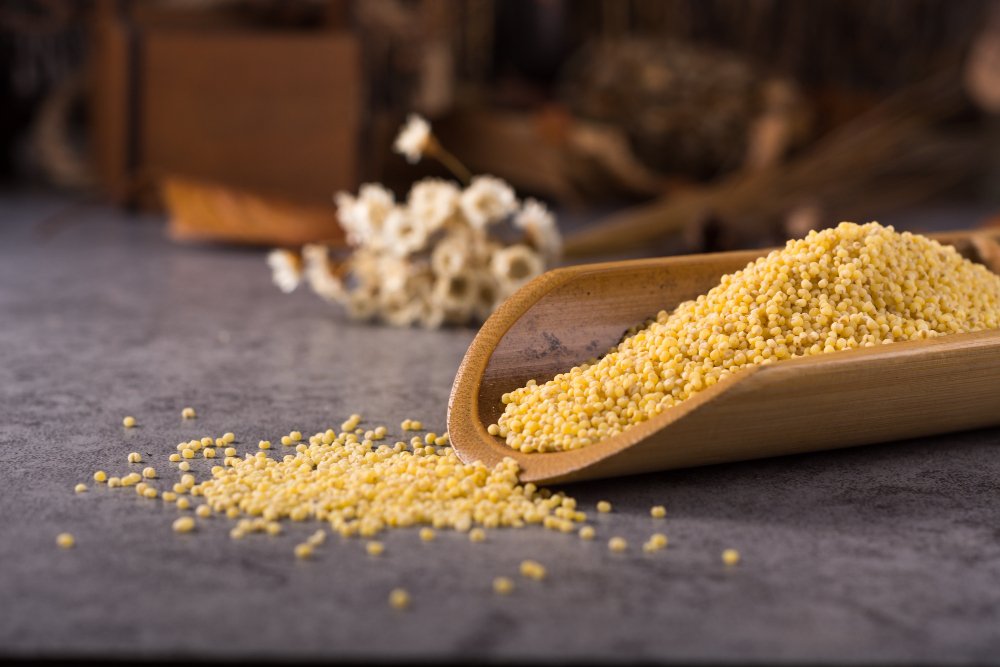
Foxtail millet (Setaria italica) is perhaps one of the earliest domesticated crops known to man. There is evidence of it being grown in China over 8,000 years ago. The grain itself is a little larger than that of little millet and tends to be more golden-yellow in color. The plant is called foxtail millet due to its bushy, bristled seed head, which resembles a fox’s tail. Known as Thinai in Tamil, Navane in Kannada, Korra in Telugu and Kangni in Hindi it grows throughout South Asia and was once a major crop in states like Andhra Pradesh, Karnataka, Tamil Nadu and many others. It is grown and eaten across China, Japan and even parts of Africa. Foxtail millet has seen more scientific study than any other minor millet in recent years for use in blood sugar regulation and its comparatively high protein content. Cooked foxtail millet has a firm nutty flavor that is slightly chewier than little millet.
Little Millet Vs Foxtail Millet: Nutritional Comparison
Here is how the two grains compare per 100 grams of raw, unpolished grain:
| Nutrient | Little Millet | Foxtail Millet |
| Calories | ~207–329 kcal | ~331 kcal |
| Protein | ~10.1 g | ~12.3 g |
| Carbohydrates | ~60.9 g | ~68 g |
| Dietary Fiber | ~7.6 g | ~8.9 g |
| Fat | ~5.2 g | ~4.3 g |
| Iron | ~9.3 mg | ~2.8 mg |
| Calcium | ~17 mg | ~31 mg |
| Magnesium | ~114 mg | ~81 mg |
| Phosphorus | ~220 mg | Moderate |
| Glycemic Index | ~54–57 | ~50–60 |
| Gluten-Free | Yes | Yes |
Sources: Little millet nutritional data from Agri News Network (ICMR-referenced, October 2020) and B&B Organics product data; foxtail millet data from USDA FoodData Central, Frontiers in Nutrition (PMC10149725), and University of Rajasthan biochemistry study (2024).
The table tells a clear story. Each grain has a distinct advantage. Foxtail millet wins on protein. Little millet wins significantly on iron and magnesium. Both are fiber-rich and low-glycemic. Let’s look at each category in more detail.
Protein: Foxtail Millet Has the Edge
Foxtail millet offers about 12.3g of protein per 100g, while little millet offers about 10.1g. This ~2g difference per 100g holds true across published nutritional data sets.
In one study published in Frontiers in Nutrition (PMC10149725), researchers analyzed foxtail millet products and found protein contents ranging from 10.98 to 16.10 grams per 100 grams of different preparations. Some variation is due to the grain itself having different protein profiles. Overall foxtail millet products were deemed highly acceptable by consumers and provided a better nutrient profile than comparable wheat and rice-based products.
For individuals who consume large amounts of grains to get their protein, particularly those on plant-based diets, foxtail millet’s higher protein totals offer a slight practical advantage when protein is a concern.
Verdict: Foxtail millet is superior in terms of protein.
Iron: Little Millet Wins by a Large Margin
It’s honestly the biggest nutritional factor that sets these grains apart.
Containing about 9.3 mg of iron per 100 grams cooked, little millet has the most iron of any grain and is the only grain of the five Siridhanya positive millets to even reach the 9 mg mark. By comparison, 9.3 mg means little millet has approximately 11x more iron than white rice which contains a mere ~0.8 mg of iron per 100 grams.
Foxtail also contains iron, about 2.8 mg per 100 grams. While that’s decent compared to most refined grains, it’s nothing compared to little millet.
Iron-deficiency anaemia affects millions of people in India and is one of the highest in the world. Women, children, and vegans are at a higher risk of suffering from iron deficiency. Having a dense source of iron that’s affordable and fits into the diets of the majority of these populations makes little millet one of the best options for combating this deficiency.
Consuming iron rich plant foods with foods high in vitamin C like lemon juice, tomato, or amla helps your body absorb more iron. Serving little millet with any of these will help you get even more out of your meal.
Verdict: Little millet is far superior for iron intake. It is the better choice for anyone managing anaemia or iron deficiency.
Glycemic Index and Blood Sugar Control: Both Are Good, Foxtail Has More Research
Each score low-to-moderately on the glycemic index scale. As such, both grains cause a slower rise in blood glucose than white rice or refined wheat products. For this reason, both are excellent choices for those with type 2 diabetes or who want to avoid spikes and crashes in energy throughout the day. Little millet has a GI of around 54–57. Foxtail millet scores between 50–60 depending on how it is prepared. One study testing the GI of raw foxtail millet measured a GI of 52.49. (Journal: Biochemistry; Year: 2024; University: Vani Medical College, Udaipur, Rajasthan. ).
Foxtail millet appears to have more clinical research focusing on blood sugar effects. In one self-controlled clinical trial published in Nutrients (PMC6213109/Peking University, 2018), subjects with impaired glucose tolerance were given 50 grams of foxtail millet daily for 12 weeks. After 12 weeks, average fasting blood glucose was reduced from 5.7 mmol/L to 5.3 mmol/L. Post-meal 2 hour glucose also improved from 10.2 mmol/L to 9.4 mmol/L. Insulin resistance was also reduced and there was an improvement in inflammation markers.
Overall, barnyard and foxtail millet rank as the best choices for diabetes. They have the lowest GI score and are among the highest in dietary fiber. Little millet is another good choice that is often noted for its blood sugar regulation benefits.
Nutritionally, little millet offers similar benefits. Magnesium (114 mg per 100 grams) directly impacts glucose metabolism and insulin response. Furthermore, multiple studies show a correlation between magnesium deficiency and type 2 diabetes risk. Little millet’s higher magnesium content may provide an edge that the GI value fails to reflect.
Verdict: Both grains support blood sugar management. Foxtail millet has stronger clinical trial evidence. Little millet contributes through higher magnesium, which supports insulin function.
Fiber: Foxtail Millet Has a Slight Edge
Foxtail millet better than rice contains about 8.9 grams of dietary fiber per 100 grams while little millet contains 7.6 grams per 100 grams. The difference is slight but most sources agree on that ratio.
Regardless, both have respectable fiber amounts that help with digestion, prevent constipation, lower LDL cholesterol, and keep you feeling full longer after eating. Both are worlds better than white rice which contains less than 1 gram of fiber per 100 grams after milling.
Each grain’s fiber consists of both soluble and insoluble parts. Soluble can help slow the absorption of glucose into your bloodstream as well as cholesterol. Insoluble fiber helps with regularity and feeding your gut microbiome.
Either grain would work great if you’re looking for millets to specifically help with constipation, digestive health, or weight. Foxtail millet contains slightly more fiber but not enough that 7.6 vs 8.9 grams of fiber per serving is night and day different.
Verdict: Foxtail millet edges ahead, though both are strong fiber sources.
Antioxidants and Phytonutrients: Little Millet Has More Polyphenols
Little millet has a higher density of phenolic compounds than foxtail millet does. Polyphenols are antioxidants derived from plants. Antioxidants help your body to: reduce oxidative stress, decrease chronic inflammation, and prevent cell damage that comes from aging and illness. Foxtail millet does have antioxidants as well. This includes flavonoids best health benefits of foxtail millet and phenolic acid. But wherever you look online that compares the two, little millet wins out on polyphenol density. Little and foxtail millet contain bioactive compounds that slow down the digestion of fat and delay sugar release into the blood stream, according to a study published in eFood(Wiley Online Library, 2023). This could be why they help control blood glucose levels, in addition to fiber.
Verdict: Little millet leads on polyphenol content and antioxidant density.
Cooking Behavior and Taste: They Suit Different Recipes
This is a practical distinction that matters in a real kitchen.
Little millet cooks faster than most millets. Because of its small size, it requires about 15 minutes of cooking time after soaking. The texture is soft and mild, closely resembling white rice in appearance and consistency. It absorbs flavors from spices, dal, and vegetables well. This makes it the easiest millet to substitute directly for rice in any recipe — from plain steamed grain to khichdi, upma, pongal, idli, dosa, and porridge. New millet eaters find it the least disruptive grain to introduce because the transition from rice to little millet is almost invisible in texture and taste.
Foxtail millet has a slightly firmer, chewier bite and a more pronounced nutty flavor. It holds its shape better after cooking, which makes it suitable for recipes where you want distinct, separate grains, biryanis, grain bowls, salads, and pulao. It takes around 20 to 25 minutes to cook. The firmer texture also means it works well in dosa and idli batter, and it performs reliably in baked preparations like cookies and bread.
Both should be soaked for at least 6 to 8 hours before cooking. Soaking reduces anti-nutritional compounds like phytates and tannins that can block mineral absorption, and it also shortens cooking time.
Who Should Eat Little Millet?
Little millet is the better choice if you:
- Are managing iron-deficiency anaemia or have low haemoglobin levels
- Want the highest antioxidant and polyphenol content among the two grains
- Are new to millets and want the smoothest transition from white rice
- Have a sensitive stomach or need an easily digestible grain
- Need a grain with the lowest calorie count per serving
- Cook for children who may resist strong-flavored foods
- Want the fastest-cooking millet option
Who Should Eat Foxtail Millet?
Foxtail millet is the better choice if you:
- Want higher protein intake from your grain, especially if you follow a plant-based diet
- Are managing type 2 diabetes and want a grain backed by direct clinical trial evidence
- Prefer a firmer, chewier grain texture for salads, grain bowls, and fusion cooking
- Want slightly higher fiber content per serving
- Cook recipes where grain structure needs to hold up biryanis, stir-fries, baked goods
The Practical Answer: Rotate Both
We’re not really trying to set up little millet vs foxtail millet here. Each has its strengths, and no single millet checkmarks all the boxes for our nutritional desires. When you rotate back and forth between them, you get the iron and polyphenols of little millet, the protein and blood-sugar research of foxtail millet, and twice the total fiber.
Our suggested rotation is: make little millet your default option for swapping out white rice in daily cooking applications like khichdi and upma. Then let foxtail millet shine when it’s called for in richer dishes that benefit from its heartier grain and higher protein levels, like pulao, dosa batter, or as a sattu in protein-rich foods.
At CMS Industries in Kachchh, Gujarat, we manufacture, supply, and export agro-products, and source many of our products directly from farmers across India. Our grains portfolio includes millets which we supply to local and international customers looking for top-quality graded, least processed grain.
Frequently Asked Questions About Little Millet Vs Foxtail Millet
Q1. What is the main difference between little millet and foxtail millet?
The most important nutritional difference is iron. Little millet delivers approximately 9.3 mg of iron per 100 grams among the highest of any millet. Foxtail millet provides about 2.8 mg per 100 grams but is higher in protein, with around 12.3 grams per 100 grams compared to little millet’s 10.1 grams. Both are gluten-free, low-glycemic, and good sources of fiber.
Q2. Which millet is better for people with diabetes, little millet or foxtail millet?
Both grains have a low-to-moderate glycemic index and support blood sugar stability. Foxtail millet has the stronger body of clinical research behind it. A 12-week trial published in Nutrients (Peking University, 2018) found a significant drop in fasting and post-meal blood glucose after daily foxtail millet consumption. Little millet’s high magnesium content also supports insulin function. Either grain is suitable for diabetic diets.
Q3. Is little millet or foxtail millet better for weight loss?
Both grains are effective for weight management because of their fiber content and low glycemic index, which slow digestion and promote fullness. Little millet has fewer calories per 100 grams and a slightly milder fiber content. Foxtail millet has more protein, which further reduces appetite. The better option depends on your wider diet if protein intake is already adequate, little millet’s lower calorie count gives it a slight edge for weight loss purposes.
Q4. Can I substitute little millet for foxtail millet in recipes?
Yes, in most cases. Both cook in similar ways soak for 6 to 8 hours, then simmer in water at roughly 1:2 grain-to-water ratio. Little millet cooks faster (about 15 minutes) and comes out softer. Foxtail millet takes slightly longer and stays firmer. For soft porridges, khichdi, and upma, little millet is the more natural fit. For pulao, grain bowls, and dishes where grain structure matters, foxtail millet holds up better.
Q5. Which millet is best for anaemia little millet or foxtail millet?
Little millet is significantly better for anaemia. At 9.3 mg of iron per 100 grams, it is the richest iron source among the positive Siridhanya millets. Foxtail millet provides around 2.8 mg per 100 grams, which is still better than white rice but far lower than little millet. For anyone with iron-deficiency anaemia, particularly women and children in plant-based diets, little millet is the more targeted nutritional choice.