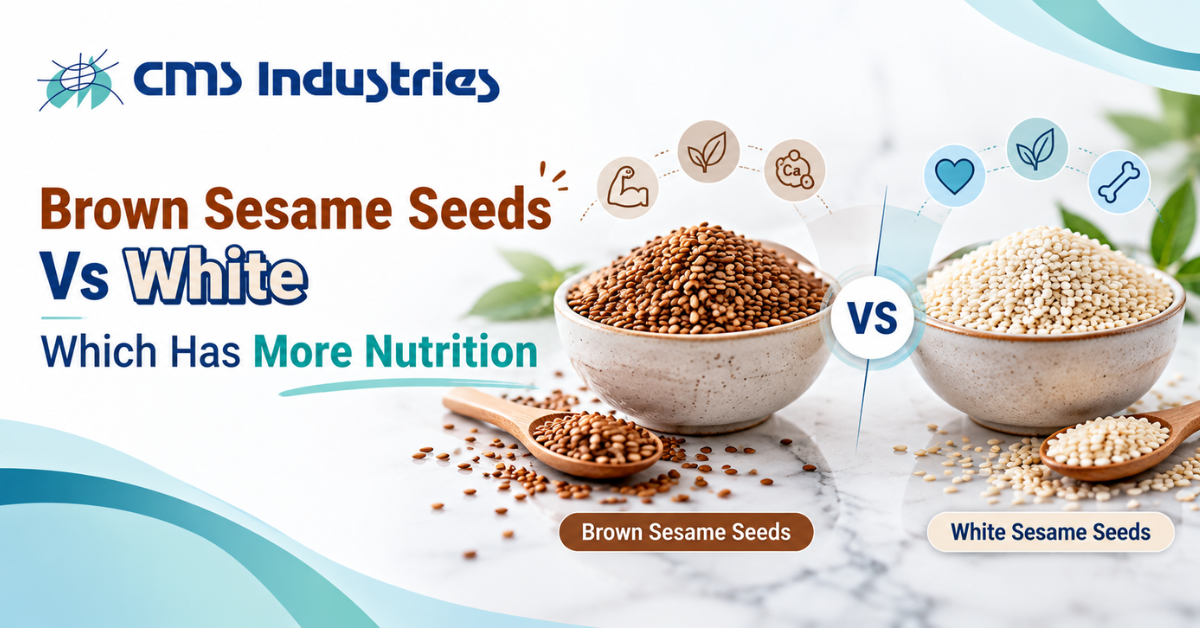
You are in the shop with two packs of till in your hands. One is tan and a little rough. The other is pale and smooth. Both boast sesame; both boast good nutrition. The brown vs. white sesame seeds question comes down to one thing: the hull. So which one goes in your ladoo, your chutney, or your tahini?
The short answer is this. Brown seeds have their hulls attached, so they have much more calcium, iron, copper, and manganese. White seeds are usually hulled, so they’re milder tasting and pack a little more protein and fat per gram. Let’s put it in real money. Every figure is from a named source, and the full list is at the end.
Brown vs White Sesame Seeds at a Glance
Brown sesame seeds are unhulled, meaning they retain their tan outer coat. White sesame seeds are usually hulled, meaning the coat is removed, leaving a creamy kernel. And that one step changes the amount of minerals more than anything else.
Here’s the short version:
- More calcium: Brown (unhulled) seeds by far.
- Brown (hulled) seeds have higher iron, copper, and manganese.
- White (hulled) seeds: slightly more protein and calories per 100 g:
- Both, in USDA data Same fibre: about 12 g per 100 g
- White seeds: milder, sweeter flavour.
- Brown seeds: stronger, nuttier flavour with a hint of bitterness.
What Does “White” Sesame Actually Mean?
First, settle the confusion of the word “white”. Shops use it for two separate products.
- Dehulled grains. The coat is peeled off, and the seed is creamy white. This is the most common white sesame used in bakeries and in tahini.
- White coat seeds. Sure. Some varieties grow with a pale coat which stays on the seed.
Vikaspedia, the Government of India knowledge portal, says Indian farmers grow sesame with white, brown, and black seed coats. So a pack marked white can be either kind. White-coat seeds are not separated in USDA data. Whole, dried seeds and hull-less kernels are listed. In the comparison below, we use these two entries, which correspond closely to brown (unhulled) and white (hulled).
Nutrition per 100 g: Whole vs. Hulled Sesame
This table uses USDA values for whole dried sesame seeds and dried hulled sesame kernels.
| Nutrient (per 100 g) | Whole seeds (brown, unhulled) | Hulled kernels (white) |
| Energy | 573 kcal | 631 kcal |
| Fat | 50 g | 61 g |
| Protein | 18 g | 20 g |
| Carbohydrate | 23 g | 12 g |
| Fibre | About 12 g | About 12 g |
| Calcium | 980 mg | 60 mg |
| Iron | 14.6 mg | 6.4 mg |
| Magnesium | 350 mg | 345 mg |
| Zinc | 7.8 mg | 6.7 mg |
| Copper | 4.1 mg | 1.4 mg |
| Manganese | 2.5 mg | 1.4 mg |
What the Numbers Mean
Calcium is the biggest gap. Hulled kernels have only 60 mg. Whole seeds contain 980 mg/100 g. Most of it is spent on the hull.
The same is true for iron, copper, and manganese. The whole seeds are more than twice as rich in iron and about three times as rich in copper.
Magnesium and zinc like to hang out together. Both of these minerals are good sources in seeds.
Hulled kernels have a bit more protein and fat. That doesn’t mean hulled seeds are a source of protein. The hull is just dead weight, so removing it concentrates the rest of the seed into each 100 g.
A Realistic Serving
Nobody eats 100 g in a day. A serving size is 10 g, or just over a tablespoon. These estimates are based on our own calculations of the USDA numbers:
- Brown (unhulled): ca. 57 kcal, 98 mg of calcium, and 1.5 mg of iron.
- White (hulled): about 63 calories, 6 milligrams of calcium, and 0.6 milligrams of iron.
These are estimates, as the weight of a teaspoon of each seed will vary slightly from seed to seed.
Does Your Body Absorb the Extra Calcium?
That is why there is more to the story than the table. On a label, numbers tell you what a food contains. They don’t tell you how much of it your body takes in.
The Vegetarian Journal, published by the Vegetarian Resource Group, spoke with USDA nutrient data staff, who said that the calcium in the sesame hull is in the form of calcium oxalate. Laboratory studies have shown that oxalates decrease the absorption of calcium. The same article reports that a Purdue University calcium researcher said he knew of no research on how well the body absorbs calcium from sesame hulls. For more context, see the differences between black and brown sesame seeds.
So the honest answer is mixed. Brown seeds have a lot more calcium. Nobody knows how much your body actually uses. Hulled seeds don’t have much calcium, but what they do have isn’t bound up in the hull.
There was one study in the lab on black and white sesame that tested heat and pressure treatments. They found baking increased the amount of calcium released from white sesame in a model of digestion, and the team ran tests in mice, too. A lab model does not reflect the same result in humans but suggests that preparation is important.
If you are prone to kidney stones, consult your doctor before consuming large quantities of any sesame. Oxalates are a known problem for those with that history.
Lignans and Antioxidants: Is There a Winner?
Sesame also has lignans, plant compounds including sesamin and sesamolin that function as antioxidants. Which is higher, brown or white?
The research doesn’t offer a neat answer. In India, a study was conducted on different varieties from different regions for three crop seasons. The sesamin level ranged from 2.10 to 5.98 mg/g across seeds, which is a wide spread. Black seeds had the highest lignans, it was found, followed by white and brown. Further analysis of Indian accessions showed that the white-seeded types had the highest variation of sesamin and sesamolin.
So here’s the bottom line. Lignan levels are more influenced by growing region and year of harvest than the label “brown” or “white”. Don’t choose a seed based on one claim about antioxidants. Lab measurements don’t prove a health result in people either.
Taste, Texture and Best Uses
Nutrition is important, but what is on your plate is important, too.
Brown sesame seeds are nutty, slightly bitter, and crunchier. They are good for:
- Til ladoo, chikki, and gajak with jaggery.
- Chilli, garlic, and salt dry chutney powder.
- Toppings for Paratha, Naan and Khakhra.
- Vegetable dish, seasoning, and tempering.
White sesame seeds are softer to bite and have a milder, slightly sweet flavour. They blend in:
- Bakery products, such as buns and biscuits.
- Smooth pastes like tahini-style spreads.
- Light desserts and sweet dishes in which bitterness would be jarring.
- Coating and garnishing for a pale, clean look.
Most tahini is made from hulled seeds. According to the article in the Vegetarian Journal, tahini prepared from whole seeds contains more calcium than tahini prepared from hulled seeds. Whole-seed tahini has a deeper taste and darker colour.
How to Choose Between Brown and White
- If you want more minerals per spoonful and a bolder, nuttier taste, go for the brown.
- Choose white for a mild flavour and a light, smooth final product.
- Both in sweets and breads combine for balance of flavour and texture.
- If you or your family have a sesame allergy, skip both.
Both seeds may be lightly roasted or ground to release the flavour. Grind in small batches; once ground, seeds go stale more quickly than when whole.
How to Buy and Store Sesame Seeds
Good seed at the shop needs a bit of attention. Make sure to check these before you pay:
- Colour: Even tan to brown for unhulled seed, or even creamy white for hulled seed, with a little dust.
- Cleanliness: No stones, husk, soil, or insect marks.
- Aroma: Light, nutty. If it has a sour, bitter, or paint-like smell, the oil is rancid.
- Dryness: Seeds free-flowing, not caking, not damp.
- Label: Packing date; on packaged food, a sesame allergen statement.
Then keep them well. Store in an airtight jar or tin, away from heat, light and dampness. Large quantities should be stored in the refrigerator. Smell the seeds before use each time and discard any that smell off.
Sourcing in Bulk
Kilos are bought by home cooks. Food makers, retailers and importers buy by the tonne, and they want to know about cleaning, packing and shipping.
CMS Industries, an exporter from Kachchh, Gujarat, has brown sesame seeds, white sesame seeds, hulled sesame seeds and natural sesame seeds in its oil seeds range. The range also includes natural sesame in black, roasted, and double-skin red. On its brown sesame page, the company lists Sortex and machine cleaning and packing in 15, 25, 40, and 50 kg sizes in PP, BOPP, or jute bags with custom printing. Specifications may vary between varieties and may change over time, so check with any supplier for the current details of each before you place an order.
Sesame Allergy: What to Know
Sesame is safe for most people, but some people can have serious allergic reactions. “FDA declares sesame the ninth major food allergen under the FASTER Act.” Starting 1 January 2023, the United States will require packaged foods and dietary supplements sold in the country to include sesame on the label. Brown and white seeds are equally allergenic.
Not all products were immediately labelled with the new label, so individuals with a sesame allergy should read every ingredient list carefully. If you and your child are allergic to sesame, talk to your doctor before trying a new sesame product.
Next Steps
Minerals are highest in brown sesame. White sesame wins on mildness and smooth texture. Neither is a bad choice, and the best choice depends on what you cook and what your body needs.
Here’s how to begin:
- Decide what is more important: minerals, taste, or texture.
- Buy a small pack of each and try them in the same recipe.
- Find the hulled or naturally white-coated on the white-labelled pack.
- Store both in an airtight container away from light and heat.
If you are buying in bulk, compare cleaning methods, pack sizes and labelling between suppliers, including the CMS Industries product pages.
Frequently Asked Questions
Which has more nutrition, brown or white sesame seeds?
The brown (unhulled) seeds have more calcium, iron, copper and manganese because the hull remains. White (hulled) seeds contain a little more protein and calories per 100 g. Fibre, magnesium and zinc are still close. There is no clear winner between the two seeds.
Which sesame seed has more calcium?
Brown seeds, unhulled. USDA data indicate 980 mg of calcium per 100 g for whole seeds and 60 mg for hulled kernels. The hull contains the calcium as calcium oxalate, so your body may absorb less than the number indicates.
Is white sesame the same as hulled sesame?
Yes, often. Most white sesame in shops is hulled, so the coat is taken off. Some varieties also produce a naturally white coat that remains on. Check the pack or ask your supplier if the seeds are hulled or natural.
Is tahini made from brown or white sesame seeds?
Most tahini is made with hulled seeds, which produces a pale, smooth, mild paste. Whole-seed tahini is more bitter and darker and contains more calcium. They’re both made from sesame, so anyone with a sesame allergy has to avoid both.
Can people with kidney stones eat sesame seeds?
See your doctor first. Sesame hulls contain calcium oxalate, and oxalates are a known concern for people who develop kidney stones. Some people can tolerate a small amount, but you should seek medical advice.