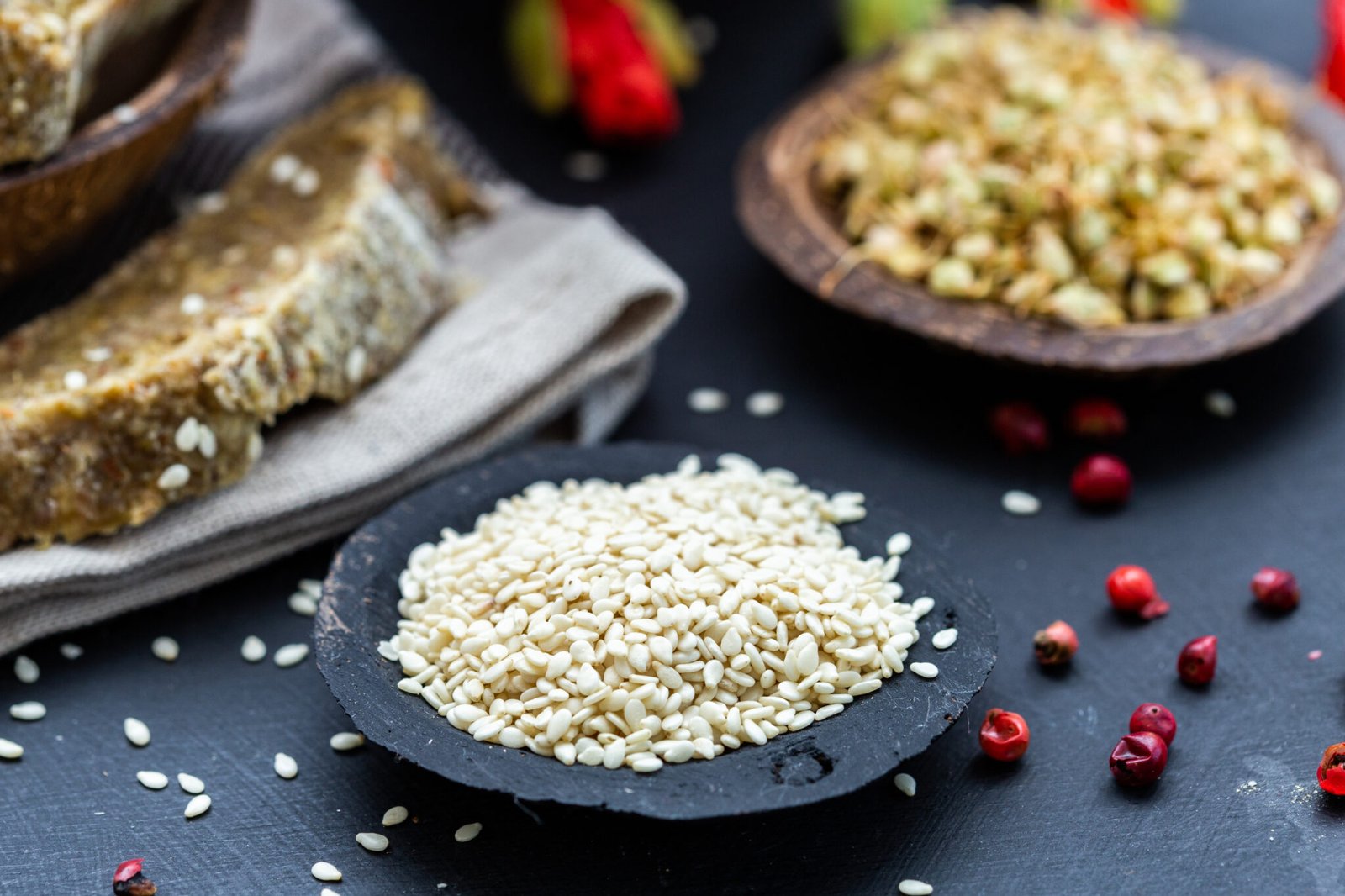
In any kitchen, you’ll probably find sesame seeds in two forms: the pale, raw sort sitting in a jar and the darker, roasted type sprinkled on bread or stirred into a stir-fry. Both originate from the same tiny seed, so it’s only fair to ask if one is a better choice for your health. In brief, raw and roasted sesame seeds are similar in energy and fat contents but differ in mineral absorption, antioxidant activity, and digestibility. Let’s take it apart.
What Makes Sesame Seeds Worth Eating in the First Place
Sesame seeds are the seeds of the Sesamum indicum plant, one of the earliest oilseed crops cultivated by humans. According to the USDA FoodData Central database, a 100-gram serving of dried, whole sesame seeds contains approximately 573 calories, 50 grams of fat, 18.6% protein, and 24.5% carbohydrates. That same serving provides significant amounts of copper, magnesium, calcium, iron, and zinc.
In addition to minerals, sesame seeds contain a group of plant compounds called lignans, which include sesamin and sesamolin. These compounds are natural antioxidants and give sesame oil a long shelf life. Raw or roasted, they offer a combination of healthy fats, plant protein and fibre that few other seeds can offer in such a small package.
Raw Sesame Seeds: What You Get
Raw sesame seeds are simply harvested, cleaned, and dried sesame seeds with no heat treatment. According to USDA data, 100 grams of whole dried sesame seeds contain about 11.8 grams of fibre and 9.98 grams of sugar, as well as their full mineral load. Raw seeds have more of their natural moisture, and some heat-sensitive compounds are closer to their original levels, as they have not been heated.
The cost is in digestibility. Raw sesame seeds contain oxalates, which are compounds that bind to minerals such as calcium, iron, and zinc and can reduce the amount that your body actually absorbs. 2. Phytic acid: This doesn’t mean that raw seeds are unsafe. It just means that the mineral content on a label isn’t always what your body actually uses.
Roasted Sesame Seeds: What Changes When You Add Heat
Controlled roasting of sesame seeds alters their chemistry in a few specific ways. According to research published in Food Research, roasting increases the release of sesamol, a lignan-derived compound with strong antioxidant properties, from its bound precursors sesamin and sesamolin. Another study, published in Food Chemistry X, looked at Ethiopian sesame seeds and found roasting boosted total polyphenol content and antioxidant activity compared to raw seeds, up to a point and hair remedies using seasme seeds. Turn the heat up too high, and those same good compounds begin to break down, and so do some heat-sensitive vitamins.
This process dries out the seeds and brings out the natural sugars, so roasted sesame seeds taste nuttier and smell more pungent than raw sesame seeds. USDA nutrition labels for whole roasted and toasted sesame seeds show some 565 calories, 48 grams of fat, 25.7 grams of carbohydrate, and 16.96 grams of protein per 100 grams, figures close to the raw version.
Raw vs Roasted Sesame Seeds: The Key Differences
Here is a side-by-side comparison of the two forms.
Calories and Macronutrients
The numbers are close enough that neither form has any real advantage for weight management. Raw seeds are slightly higher in calories per gram due to the moisture content. Roasted seeds lose some water weight in the processing, and the remaining nutrients are slightly more concentrated.
Mineral Absorption
This is where roasting really comes into its own. Some of the phytic acid in the seed coat breaks down with heat, so your body can absorb more of the calcium, iron, and zinc that sesame seeds contain. If you prefer to keep them raw, soaking, sprouting, or hulling raw seeds can have a similar effect but without heat.
Antioxidant and Lignan Content
From the above studies, it seems that light to moderate roasting results in higher availability of antioxidant compounds like sesamol. Extensive or heavy roasting at high temperatures destroys that advantage and some of the natural tocopherols in the seed. To summarise, it’s better a mild roast than raw seeds and a too-dark roast.
Taste, Digestibility, and Shelf Life
Roasted seeds are easier to digest for most people, because heat breaks down some of the tougher plant fibres and antinutrients. They also have a more robust, toasty flavour that complements savoury dishes, baked goods, and garnishes. Raw seeds have a slightly bitter, milder flavour and are great in recipes where you’re going to grind or cook them anyway, like homemade tahini.
So, Which One Should You Choose?
Most people will benefit slightly more from roasted sesame seeds because of their better mineral absorption and flavour that’s easier to include in recipes. If you want to soak, sprout, or cook them yourself, or just want an unprocessed ingredient, raw sesame seeds are a good option. And neither is bad for you. Generally, the variety you select depends on how you intend to use the seeds and your own preferences.
Some practical tips:
- Store raw and roasted white sesame seeds for hair growth in an airtight container in a cool, dark place to slow the oxidation of their natural oils.
- If you live in a hot climate, refrigerate or freeze the sesame seeds, as they have a high fat content and tend to go rancid.
- If you want the flavour and absorption benefits of roasting but don’t want to buy a roasted product, simply lightly toast raw seeds in a dry pan for a few minutes at home.
- If you’re watching sodium or fat intake, check labels on roasted seeds for added salt or oil.
Where CMS Industries Fits In
CMS Industries, based in Kachchh, Gujarat, is a supplier of a range of oil seeds to buyers in the food and export trade. These include natural sesame seeds, hulled sesame seeds and roasted sesame seeds in black, brown and white varieties. It is important to understand the difference between raw and roasted sesame seeds to match the right product to the right application, particularly when sourcing sesame seeds for food processing, bakery use or retail packaging. To learn more about the sesame seed range, go to the CMS Industries website.
Frequently Asked Questions
Is it better to eat sesame seeds raw or roasted?
Both are good options. Roasted sesame seeds also offer a bit more mineral absorption and a more intense flavour. Raw seeds are higher in moisture and work well in recipes like homemade tahini or sprouted seed mixes.
Do roasted sesame seeds lose their nutrients?
Light roasting does not deplete nutrients and can actually improve the antioxidant availability. Moderate roasting is best, as some heat-sensitive compounds can be reduced with heavy or prolonged high-heat roasting.
Can you eat raw sesame seeds every day?
Yes, eating raw sesame seeds daily in normal food amounts is safe. If you’re worried about mineral absorption, you can soak them or lightly toast them at home to help.
Why do roasted sesame seeds taste different from raw ones?
Roasting causes heat to cause the Maillard reaction and toasts the natural sugars and oils in the seed, creating that deeper, nuttier flavour and darker colour associated with roasted sesame seeds.
Which type of sesame seed is best for tahini or oil?
Cold-pressed sesame oil and mild tahini are commonly produced from raw seeds, and toasted sesame oil and dishes that require a more pronounced, nutty flavour tend to use roasted seeds.