You might think groundnut is a snack you eat during a movie, but you’re only seeing part of the picture. This small legume, also known as groundnut, is a very important element in agriculture, food processing, and export trade. It feeds animals, runs machines, hydrates skin, and even helps farmers keep their soil healthy for the next crop.
Let’s break it down. Here are 10 economic uses of groundnut to see why this crop is so important well beyond the dinner table and how a supplier such as CMS Industries fits into the bigger picture.
Why Groundnut Holds Economic Weight
Groundnut (Arachis hypogaea) is a major oilseed crop in the world. India alone produced 130.74 lakh tonnes of groundnut in the 2025-26 crop year, and the crop is mainly grown in Gujarat, Rajasthan, Madhya Pradesh, Tamil Nadu, and several other states, APEDA said. India is the world’s second-largest producer of groundnuts globally.
That scale matters because groundnut is in so many pies at once. Oil mills need it; it’s what feed manufacturers need. Food makers need it. Even the soap and cosmetics industry requires it. This is why this single crop has so much economic power.
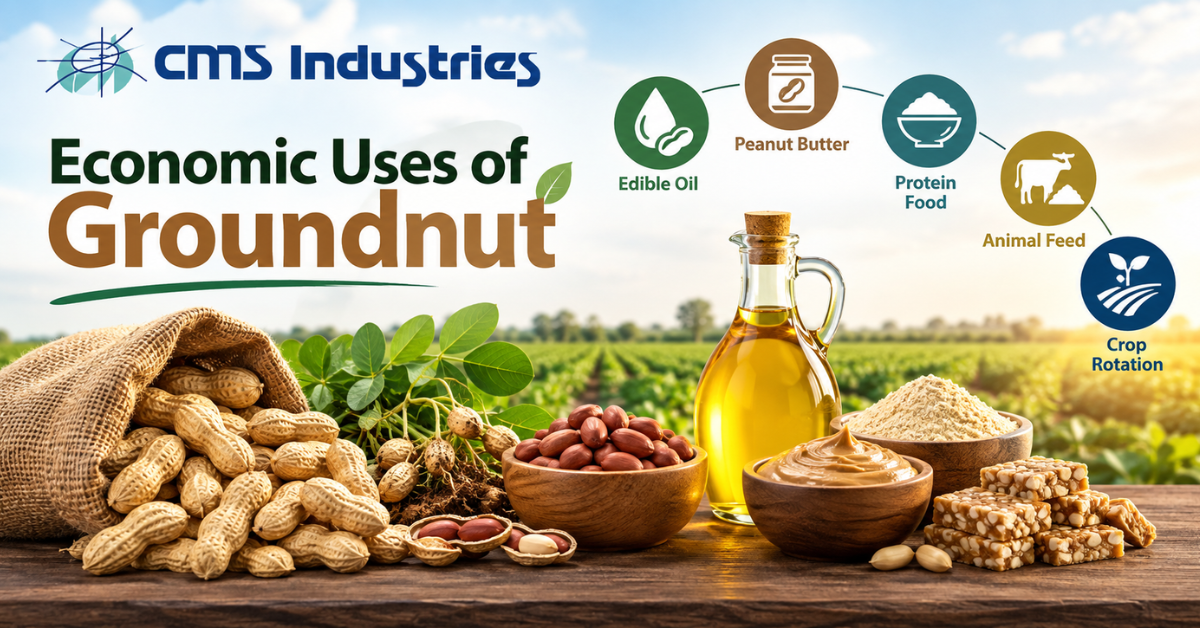
10 Economic Uses of Groundnut
1. Cooking Oil Production
The most common use of groundnut is to extract oil. Groundnut oil is used as a cooking oil in many households and restaurants because of its mild flavour and high smoke point. Groundnut is the major oilseed crop of India and contributes significantly to bridging the deficit of vegetable oils in the country. Oil mills press, or solvent-extract, kernels, and the oil ends up on retail shelves, food service kitchens, and packaged food manufacturing lines.
2. Animal Feed from Oil Cake
The rest of the healthy benefits of black sesame seeds is not wasted after the oil has been extracted. The remaining sesame cake or meal is naturally rich in protein, fiber, minerals, and beneficial plant compounds, making it a valuable nutritional ingredient. Black sesame seeds are known for nutrients such as calcium, magnesium, iron, and healthy fats, while sesame meal can provide protein and energy for livestock feed. It can be used as an ingredient in feed for cattle, poultry, and other livestock, helping feed producers add nutritional value at a relatively affordable cost. This is one reason companies such as CMS Industries may offer sesame de-oiled cake as a separate product line, as the demand for nutritious animal-feed ingredients complements the market for sesame oil.
3. Peanut Butter and Processed Foods
Peanut butter is a billion-dollar category, and groundnut is the raw material behind it. Groundnuts are used in energy bars, peanut milk, sauces, and bakery mixes, besides butter. For food manufacturers, a steady supply chain of groundnuts is vital to keep these product lines running without any interruptions. That is why sourcing from established groundnut suppliers is important to guarantee consistent quality.
4. Confectionery and Snack Foods
Roasted, salted, candied, or ground into brittle, groundnuts and sesame seeds for period are confectionery favourites around the world. A steady supply of groundnut kernels and quality sesame seeds is essential for traditional sweets such as peanut chikki, sesame chikki, til laddoos, and sesame brittle in South Asia, as well as sesame-based confectionery, energy bars, and nougat in international markets. Sesame seeds are particularly valued for their nutty flavour, crunchy texture, and nutritional profile, making them a popular ingredient in healthier snack and confectionery products. Snack food companies depend on reliable supplies of both groundnuts and sesame seeds to maintain consistent production throughout the year.
5. Export Trade and Foreign Exchange Earnings
Not only locally is groundnut consumed. It crosses borders in huge quantities. India exported groundnuts worth nearly USD 795 million in FY 2024-25 at 746,303.19 metric tonnes. That kind of volume brings real foreign exchange into the economy and supports thousands of jobs in farming, processing, and logistics. Here, exporters and manufacturers, such as CMS Industries, play a direct role in linking Indian groundnut supply with international buyers.
6. Soap, Cosmetics, and Industrial Products
Groundnut oil is not confined to the kitchen. It is used as a base ingredient in soaps, lotions, and other cosmetic formulations by manufacturers for its moisturising properties. It is also used in lubricants and in some formulations of paint. This industrial demand serves as an alternative source of revenue to food use, thereby keeping oil mills active even during slack demand periods for cooking oil.
7. Biodiesel and Renewable Energy
With fuel prices rising and concerns about sustainability, groundnut oil has found a role in making biodiesel. The oil can be processed into a cleaner-burning fuel that can be an alternative to conventional diesel. The shells and hulls of groundnuts are also used as biomass for energy generation based on combustion, giving a second life to the crop in the renewable energy sector.
8. Soil Health and Crop Rotation Benefits
This one is a little less obvious but equally valuable. Groundnut is a nitrogen-fixing legume. Its root nodules extract nitrogen from the air and put it into the soil. Farmers who alternate groundnut with cereal crops such as wheat or maize often have better yields in the following season and need less synthetic fertiliser. That adds up to real cost savings on the farm.
9. Shell, Husk, and Hull By-Products
Groundnut shells and husks were earlier considered as farm waste, but not any longer. These by-products are now used to produce particleboard, compost, animal bedding and even fuel briquettes. This converts what was once a waste product into a usable product, providing another small but steady stream of income for processors.
10. Pharmaceutical and Health Applications
Groundnut oil and extracts are used in some pharmaceutical formulations and topical products. Groundnuts are also a good source of protein, healthy fats, and nutrients like vitamin E and folate, so they stay relevant in the health food space too. This dual role as a food and pharmaceutical raw material ensures constant demand across different categories of buyers.
How This Adds Up for Farmers and Suppliers
Put together these 10 economic uses of groundnut, and you have a crop that seldom goes to waste. The kernel feeds the people. Oil cooks food and powers machines. The cake is used to feed animals. The shell produces products. Even the roots feed the soil for the next season.
That provides a farmer with multiple potential sources of income from one harvest. For manufacturers and exporters, it’s a supply chain worth building with care, from sourcing quality kernels to processing them efficiently. Here is the space where CMS Industries of Gujarat operates, offering groundnuts and oilseeds, grains, pulses, and spices to buyers who want consistent quality and reliable delivery.
Wrapping Up
Groundnut is one of those crops that silently supports several industries at once without getting much credit for it. More people than you know it, this legume appears in more spots, from the kitchen oil bottle to the feed troughs on a dairy farm, and from soap bars to biodiesel tanks. These uses of groundnut help to explain why the crop remains a steady economic contributor across farming communities, food processors and export markets alike.
It’s hard to replace a crop that can feed a family, fatten livestock and leave the soil better than it found it. That is one reason groundnut cultivation persists in Indian agriculture for so long, even as newer cash crops compete for the same farmland. Prices fluctuate with global supply, but the underlying demand across food, feed and industrial buyers rarely disappears entirely.
The next step for anyone wanting to source groundnut or groundnut by-products is to identify suppliers who are aware of the requirements for both the food-grade and industrial-grade needs, as the quality standards differ for the two uses. Buyers should also enquire about moisture content, aflatoxin testing, and grading, as these all affect the safety and shelf life once the product reaches its final market.
FAQs
- What is the main economic use of groundnut?
Groundnut is primarily grown for oil extraction. The kernels are pressed or solvent-extracted to make cooking oil, and the remaining cake is protein-rich animal feed, giving farmers and processors two sources of income from one crop.
- Is groundnut farming profitable for small farmers?
Yes, groundnut farming can be profitable. The crop also adds to the nitrogen content of the soil, so you require less fertiliser over time. Demand for oil, feed, and confectionery locally also tends to keep prices relatively stable in most growing seasons.
- Which country exports the most groundnut?
India is the world’s largest exporter of groundnut and the second largest producer. Other major producers are China, the United States, and several African countries, and the strongest demand is in Southeast Asia and the Middle East.
- Can groundnut shells be used for anything?
Yes. Groundnut shells and husks are used in the manufacture of particle board, compost, animal bedding, and fuel briquettes. What used to be considered farm waste is now a small incremental income stream for processors and mills.
- Why do industries prefer groundnut oil over other oils?
Groundnut oil has a high smoke point, mild flavour, and good shelf stability, which makes it useful for both cooking and industrial formulations such as soaps and lubricants. Its versatility helps keep demand steady in food and non-food sectors.