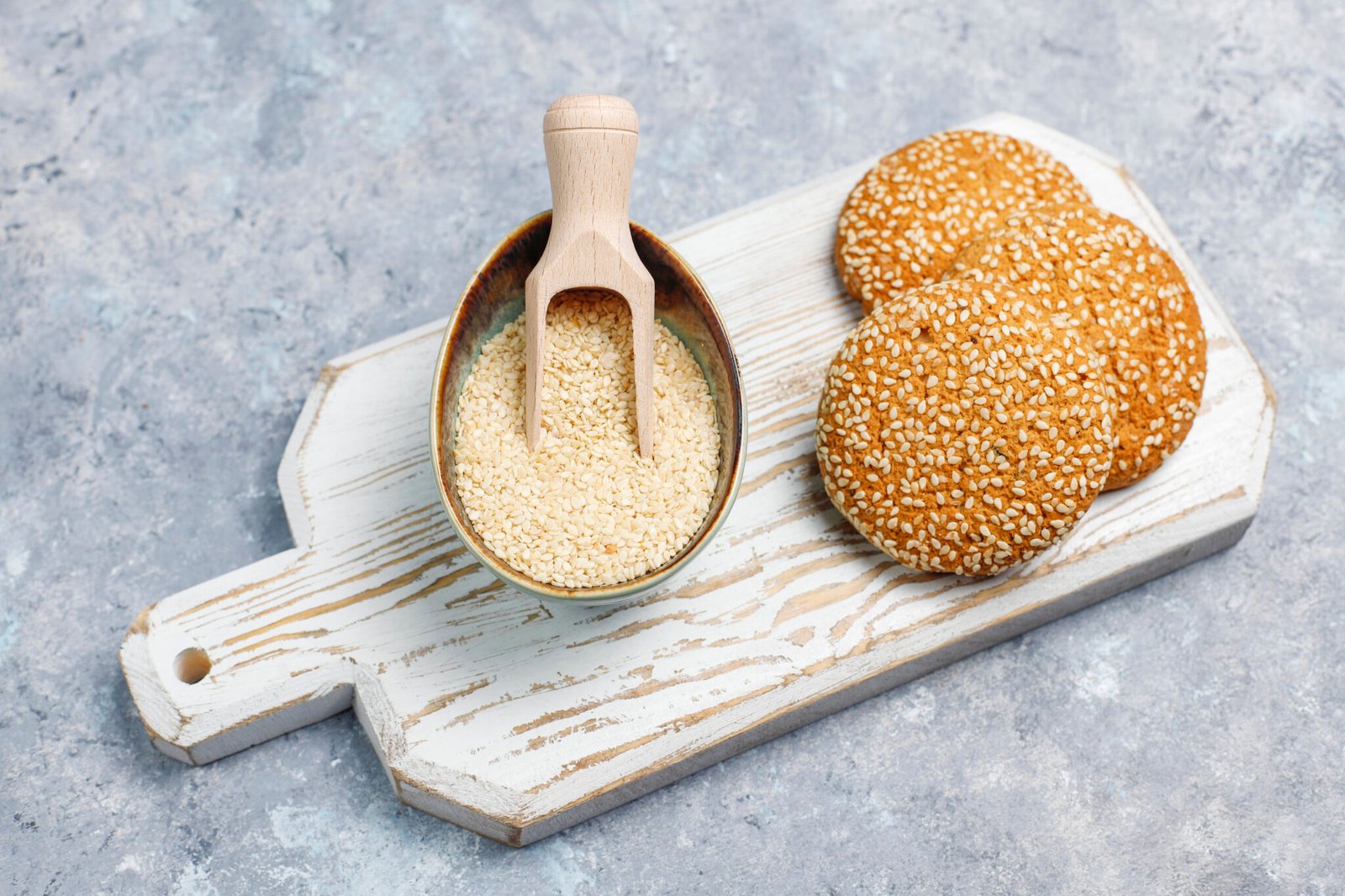
Come to the store and get two bags of sesame seeds. You will see that one looks pale and smooth and the other looks a bit darker and rougher. The difference is in the hull, the outer thin layer of the seed, and whether that hull has been removed. The hulling process does more than change texture and colour. It changes the nutrition you eat with each bite. Here’s what you need to know about hulled vs unhulled sesame seeds so you can decide which is best for your kitchen or your health goals.
What Does “Hulled” Actually Mean?
Sesame seeds grow within a thin, edible husk known as the hull or seed coat. Hulled sesame seeds have had their outer layer removed, usually through soaking and a mechanical process, resulting in a smooth, light-coloured kernel. Unhusked sesame seeds, also known as whole or natural sesame seeds, retain the hull. That hull is where a lot of the calcium and fibre in the seed are stored, which is why removing it changes the nutrition profile more than most people expect.
Hulled vs Unhulled Sesame Seeds: The Nutrition Breakdown
Calcium: The Biggest Gap
Here is where the two seeds differ the most. Whole, unhulled sesame seeds contain almost 280 milligrams of calcium per ounce, USDA data shows, while hulled seeds have fewer than 20 milligrams per serving. That is about a factor of fourteen. If you’re eating sesame seeds specifically to support your calcium intake, especially on a dairy-free or plant-based diet, unhulled seeds are the obvious choice.
Iron: Unhulled Seeds Still Lead
Unhulled nutritional benefits of sesame seeds have a higher iron content than hulled sesame seeds as well. The USDA numbers show about 4 milligrams of iron per ounce in whole sesame seeds compared to less than 2 milligrams in hulled sesame seeds. Hulled sesame seeds are therefore a poorer source of iron, especially for those with borderline anaemia who are trying to improve through diet.
Fibre: A Smaller but Real Difference
Both types of sesame seeds contain similar amounts of total dietary fibre, just more than 3 grams per ounce. It’s the kind of fibre that makes the difference. Hull contains bran, so unhulled seeds have a little more insoluble fibre, which is the kind that keeps digestion regular.
Vitamin E: Where Hulled Seeds Pull Ahead
Hulled healthy benefits of sesame seeds have their own benefits too. Many nutrition comparisons show hulled seeds to have higher vitamin E than unhulled seeds, because the removal of the hull concentrates the fat-soluble nutrients of the kernel. If vitamin E intake is important to you, hulled seeds have a real advantage here.
Protein, Fat, and Calories: Nearly Identical
The macronutrient content is almost the same for both types. Calories, protein, fat, and carbohydrate values vary only slightly between hulled and unhulled sesame seeds, so neither one has a real advantage for weight management or general energy intake.
Zinc, Magnesium, and Phosphorus
Both types remain good sources of zinc, magnesium and phosphorus. These minerals are affected to a much lesser extent than calcium and iron are affected by dehulling.
Why Does Hulling Change the Nutrition So Much?
The plant develops naturally so that the outer coat of the seed has a concentration of some minerals and calcium. When manufacturers hull the seeds, often to make them tastier, have a better texture, or last longer on the shelf, they take that mineral-dense layer with it. The rest of the kernel still contains healthy fats, protein, and several vitamins, but the calcium and much of the fibre are lost with the hull.
Taste and Texture Differences
Hulled and unhulled sesame seeds also behave differently in the kitchen, aside from nutrition.
- Unhulled sesame seeds have a tougher chew and a more robust, nutty, slightly bitter taste because the hulls add texture to the seeds.
- Hulled sesame seeds have a milder, sweeter, smoother, softer texture that blends more easily.
This is part of the reason hulled seeds are the default for tahini and sesame paste, where a smooth, mild result is more important than mineral density.
Which One Should You Choose?
Depends on what you’re using the seeds for.
- If you’re looking to increase your calcium and iron intake, especially if you’re on a dairy-free diet, worried about bone health, or just looking to increase your overall mineral density, then you want unhulled sesame seeds.
- For a milder flavour, smoother texture, or a little more vitamin E, or if you’re making tahini, sesame paste, or delicate baked goods, choose hulled sesame seeds.
- Both types are fine as part of a well-rounded diet. For day-to-day cooking, where flavour and texture are more important than maximising minerals.
Both of these kinds are healthy. It is contingent upon your nutritional priorities and what you’re going to do with the seeds.
Storage Tips for Both Types
As the hull has been removed, hulled sesame seeds are more susceptible to becoming rancid, so for the best shelf life, store them in an airtight container in the fridge or freezer. Keeping the hulls on sesame seeds will give them a slightly longer life at room temperature, but putting either kind in a cool, dark, airtight place will increase their shelf life.
Sourcing Hulled and Unhulled Sesame Seeds
There is a real nutritional gap between hulled and unhulled seeds, so it’s important to know precisely what type you are purchasing. Suppliers of natural (unhulled) and hulled sesame seeds and black, brown and white for food and export trade are CMS Industries, Kachchh, Gujarat. Buyers can find the full sesame seed range on the CMS Industries website, allowing them to find the specific type they require for that particular product, whether it is a mineral-rich whole seed or smooth-hulled kernel for tahini production.
The Bottom Line
The unhulled sesame seeds have a real nutritional advantage, especially in calcium and iron, as the mineral-rich hull stays. Hulled sesame seeds lose some of that mineral density, but they do so for a milder taste, a smoother texture, and a little more vitamin E. They are both good, nutritious additions to a well-rounded diet. The better choice will depend on whether you are looking for minerals or for culinary versatility.
Frequently Asked Questions
Are unhulled sesame seeds always healthier than hulled seeds?
For calcium and iron specifically, yes, unhulled seeds are much higher. Hulled seeds still contain healthy fats, protein, and a bit more vitamin E, so neither type is unhealthy.
Can I substitute hulled sesame seeds for unhulled in a recipe?
Yes, the swap works fine in most recipes, as the macro profile is nearly identical. Unhulled seeds have a nuttier, firmer bite, while hulled seeds will have a milder flavour and a smoother texture.
Why do hulled sesame seeds have less calcium?
Most of the calcium in the seed is in the outer hull. When that layer is removed in processing, the kernel that remains loses most of that mineral content.
Which type of sesame seed is better for tahini?
For tahini, hulled sesame seeds are preferred, as they produce a milder flavour and smoother texture, leading to a creamier and less bitter paste.
Do black sesame seeds count as hulled or unhulled?
Black sesame seeds are generally unhulled because the dark outer hull is still intact, which is part of the reason they carry a strong mineral content similar to other whole sesame seeds.